Join/Renew


-

AI: The Gap Between Employer Expectations and Student Attitudes
Employers increasingly report that AI skills are important for recent college graduates. At the same time, there is growing evidence to Gen Z’s resistance to AI. The result is a striking disconnect: Employers are asking graduates to be ready for AI, while a significant portion of students are asking whether AI deserves a place in their work at all.
-

Skills Lab Leverages Employers and Alumni to Teach Students High-demand Skills
The winner of NACE’s 2026 Chevron Innovation Award, the Binghamton University Fleishman Career Center Skills Lab is an innovative and collaborative space for students to learn and practice high-demand, industry-relevant skill sets that are taught by the university’s alumni and employer partners.
-

Platform Redefines How Firm’s Interns Learn and Launch
The employer winner of the 2026 NACE Technology Excellence Award, Grant Thornton implemented a centralized, technology-enabled learning platform to streamline orientation and training for its internship program and deliver a consistent, high-quality experience regardless of location.
-

Building a Career Design System That Supports Self-discovery and Career Learning
UVA’s new Career Design and Discovery initiative in the College and Graduate School of Arts & Sciences is focused on building a connected ecosystem that supports both self-discovery and career learning for all of the college’s undergraduate students.
-

Agility, Foundations, Differentiation: An Employability Model in the Age of Artificial Intelligence
A new qualitative study investigates what student employability looks like in the age of artificial intelligence. Its findings point to implications for higher education, employers, and policymakers.
-

Building Tomorrow's Professionals: How ePortfolios and NACE Competency Reflection Shape Career Readiness and Professional Identity
A well-crafted ePortfolio can help students fashion a professional identity and combine their academic, co-curricular, and extracurricular experiences so that an employer can more easily appraise their knowledge and skills.
-

Integrating Emotional Intelligence Into Career Readiness: A Cross-Campus Partnership Model
Staff at the Career Readiness Center at the UNT Health (formerly the University of North Texas Health Science Center) and staff from Be|Well, a campus burnout prevention program, worked together to connect wellness and career readiness.
-

Cultivating the Habit of Career Journaling in Early Talent
Helping students get in the habit of career journaling allows them to capture their experience in real time and will ultimately strengthen the quality of information captured on their resume.
-

Internship Evaluation Metrics Should Look Beyond Traditional Measurements
When measuring the success of an internship program, focusing only on conversion rate or retention can ignore other valuable information.
-

The Ghostwritten Candidate: AI Fraud, Auto-apply, and the Fight for Authentic Career Readiness
Recruiters are being flooded with AI-generated materials that make it difficult to distinguish real from fake candidates. We need to teach our students to use AI properly and ethically, in a way that doesn’t deprive them of their own voices and won’t make them blindly reliant on copy and pasting AI outputs.
-

The Value of Faculty Connecting Classroom Lessons to Career Success
California State University, Los Angeles has identified career-engaged teaching using the NACE career readiness competencies as a way to heighten the preparation of students for their careers while boosting student retention.
-

Offering Internship Opportunities to High School Students
St. John’s County School District in St. Augustine, Florida, works with local employers to offer internships to high school students in 18 fields, including architectural design, cybersecurity, medical research, and robotics.
-

Nearly Half of 2026 Grads Had a Job Offer Before Graduation Day
More than two out of five new college graduates had at least one job offer before graduation, according to results of NACE’s 2026 Student Survey.
-

How to Help Students Navigate Salary Negotiations with Confidence
Many students may want to negotiate after receiving a job offer but don’t know how, so it's up to career services staff to prepare them for this process.
-

Level Up Your Career Center: A Practical Guide to AI-Powered Gamification
Using AI-driven gamified learning tools can help students think critically and gain skills, but it requires a human touch to develop and refine throughout the development process.
-

Opportunity to Grow, Advance Tops Wish List for Class of 2026
Class of 2026 graduates are looking for employers that will invest in their future by providing opportunities to grow and advance in their career.
-

Building Skills and Confidence to Ensure Interns Are Career-ready
The American Heart Association’s approach to its internship program is to create intentionally designed experiences rather than a collection of activities.
-

AI in the Job Search: Students' Attitudes, Expectations, and Experiences
For decades, one of the pervasive arguments in college recruiting has been the effectiveness of high-tech versus high-touch practices. According to research conducted by Mary Scott, that argument persists with the integration of AI into college recruiting.
-

Perspective on Service
Volunteering requires a willingness to contribute, but by doing so, you can learn from others and develop leadership skills.
-

AI Integration by Committee: Team Guides AI Research, Discussion, and Decision-making
UConn’s Center for Career Readiness and Life Skills created an AI Committee to develop a sustainable, intentional strategy for integrating AI into career services in ways that support student learning, staff confidence, and employer/alumni engagement.
-

Internship Program Retention Rates Underscore Long-term ROI
Internship programs are about more than just getting quality hires in the door: Retention metrics reported in NACE’s 2026 Internship & Co-op Report demonstrate the long-term ROI of having a program.
-

When Everyone Asks About Data but No One Agrees
When collecting data, more isn't always better. Gathering the right data, providing context, and using it intentionally allows career centers to demonstrate their role in the career ecosystem.
-

The Impact of AI on the Early-career Labor Market
Artificial intelligence (AI) is reshaping the workplace, but one of its most important implications remains unclear: What does AI mean for early-career jobs?
-

We’ve Outgrown the Career Fair—So Why Are We Still Doing Them?
Career fairs have a role in a student's career journey, but instead of being a focus, they are best used as part of a broader, more innovative ecosystem that prioritizes skills and relationships.
-

Building the Future Workforce Pipeline: The HOPE Scholarship
Georgia’s HOPE Scholarship is designed to develop talent to meet the state’s workforce needs. A study explored the relationship between HOPE status and student major selection specifically connected to the state of Georgia’s workforce needs.
-

On-campus Internships Are Effective Vehicle for Intentional Skills Development
The University of Colorado at Boulder’s on-campus internship program is designed to help departments reimagine student employment as a more intentional and developmental experience by embedding career readiness skills directly into student work.
-

Classroom Collaborations: Recruiters Connect With Student Talent, Faculty
Employers are going into the classroom to share expertise and establish relationships with students and faculty, according to results of NACE’s 2026 Internship & Co-op survey.
-

Sensitive Data and Logic Bombs: Why Perpetrators Are Using Fake Identities in the Job Search
Employers are increasingly reporting attempts by fake candidates to obtain jobs—and gain access to the organization’s systems and properties—for unlawful purposes.
-

Op-ed: If Employers No Longer Train Entry-level Hires, What Is Higher Education’s Role?
For generations, the transition from college to career followed a relatively stable script, and entry-level jobs were not just jobs; they were training grounds. Now we’re seeing a shift away from that traditional path. So, whose responsibility is it to prepare students for work?
-

Benchmarks: AI Integration in Career Centers Is Growing
Results from NACE’s 2026 Career Services Benchmarking Poll on AI show a big shift in just a few years in how AI is integrating into the work of career centers. Eighty-six percent of career centers are using AI as an assistive tool when working with individual students—up sharply from just 20% in 2023 and 76% in 2025.
-

When It Is More Than Career Stress: Ethical Referral to Mental Health Services in Career Practice
Supportive career services often are sufficient to help stressed clients regain clarity and direction. At times, however, the distress that appears in career-focused conversations signals more than "normal" stress. Persistent sadness, impaired daily functioning, or expressions of hopelessness may indicate mental health concerns that exceed the scope of career-focused interventions alone.
-

Say Yes to Volunteer Opportunities
Volunteering is a great way to both grow personally and professionally and to positively contribute to impactful organizations.
-

Show Up for Others by Serving as a Mentor
Volunteering to serve as a mentor can be one of the most powerful ways to give back because it directly shapes future generations and helps them grow both personally and professionally.
-

Volunteering is About Willingness to Show Up
While it can be hard to take the first step, but through volunteering, you can gain more than you give through connection, growth, and becoming part of something bigger.
-

Reflections on the Importance of Volunteering
Volunteering can be a meaningful way to stay connected to your community and the professional spaces that shape your life and work.
-

Employers Say New Grads Are Largely Prepared for Work, With Room to Improve
Overall, employers say new college graduates are reasonably well prepared for the jobs they will enter after graduation—and more than 20% say they are very well prepared, according to NACE’s Job Outlook 2026 Spring Update.
-

Demand for AI Skills in Entry-level Jobs Nearly Triples Since Fall 2025
AI is increasingly becoming an expectation for early career talent, shaping both the job market and entry-level work, according to NACE’s Job Outlook 2026 Spring Update.
-

Employers Expect to Hire 5.6% More New College Graduates This Year
Employers expect to increase new college graduate hiring from the Class of 2026 by 5.6%, a projection driven upward by the more than one-third of respondents reporting plans to bring in additional hires, according to results of NACE’s Job Outlook 2026 Spring Update.
-

The Key Skills Employers Seek on College Students’ Resumes
When reviewing the resumes of Class of 2026 candidates for entry-level positions, employers are seeking graduates who provide evidence of polished teamwork, problem-solving, and communication skills, according to results of NACE’s Job Outlook 2026 Spring Update survey.
-

Why I Volunteer
Volunteerism can serve as a reminder about why early talent work matters, and why, when done well, it has the power to change not just careers—but futures.
-

Service Is a Great Professional Development Tool for Personal Growth
Volunteering is a great way to engage with colleagues, contribute to shared goals, and feel like part of a community while also refining the skills needed to grow personally and professionally.
-

Supporting Formerly Incarcerated Students
Project Rebound at Sonoma State is a high-touch, relationship-centered program designed to support students who are formerly incarcerated and system-impacted from admission through graduation.
-

Relocation Assistance for Interns: Why It Matters and How Employers Set Amounts
Approximately one-half of employers responding to NACE’s 2026 Internship & Co-op Survey report that they provide financial relocation assistance to interns, a benefit that they say also boosts their experiential education programs.
-

Intern Conversion Rate Hits Highest Mark in Five Years
Key metrics for internship programs—offer, acceptance, and conversion rates—all increased among 2024-25 interns compared to 2023-24 interns.
-

Employers Expect to Hire Nearly 4% More Interns This Year
Employers expect to bring in 3.9% more interns in 2025-26 compared with 2024-25, according to NACE’s 2026 Internship & Co-op Report.
-

Advising for the AI Economy – Three Shifts Career Services Needs to Make
The irreplaceable value of career staff is found in their judgment, personal relationships, and the human capacity to help a student understand who they are becoming, not just where they are applying.
-

Integration of Assessment Tool Highlights Intern Skill Development
Last summer, Queens College incorporated the NACE Career Readiness Competencies into its summer internship program and used the NACE Competency Assessment Tool to quantify gains interns made.
-

AI and Entry-level Jobs: Higher-level Skills Replace Grunt Work
Jeff Crume, an adjunct professor of cybersecurity who has spent more than four decades in the IT industry, provides insight into the ways companies and college students are adapting to AI’s impact on the entry-level workforce.
-

Hourly Wage for Interns Climbs but Is Down Over Last 10 Years in Real Terms
Although the average hourly wage for interns has continued to rise over the past 10 years, due to inflation, it has declined in real terms. Meanwhile, the average hourly wage for co-ops dipped slightly but is up in terms of inflation rates.
-

Dream to Create Program Aimed at Sophomores Becomes Reality at Muhlenberg
Affirmation from career center staff shifted a conceptual spark into a departmental priority allowing the Sophomore Career Accelerator to launch as a signature initiative at Muhlenberg College.
-

Skills-based Hiring Fits With Insperity’s Vision of Future Workforce
Because Insperity has long-used behavioral-based interviewing to identify candidates’ qualities and experience, the transition to more skills-based hiring has been a relatively smooth one.
-

Percentage of Employers Expecting to Offer Signing Bonuses Increases
Nearly 56% of employers expect to offer signing bonuses to their new college hires from the Class of 2026, according to results of NACE’s Job Outlook 2026 survey.
-

Addressing the Real-Time Information Gap in Career Services
For many, joining the workforce can be an opaque process with little insight from employers, but by embracing more transparency, career centers and employers can work together to illuminate this journey.
-
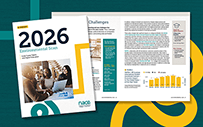
2026 Environmental Scan
NACE’s 2026 Environmental Scan synthesizes proprietary research from Job Outlook and Student Survey, national labor market data, and federal policy analysis to help you anticipate change and plan strategically.
-

OU Career Center Using NACE Tool to Support Focus on Competency Development
The University of Oklahoma Career Center has been using the NACE Competency Assessment Tool since this past summer. Staff saw it as a viable device to help support their focus on developing their students’ competencies.
-

What Students Need to Know About the Skills-Based Hiring Process
Students hoping to demonstrate their skills during a skills-based hiring process should share examples and situations when they used their skills to solve problems, according to employers responding to NACE’s Job Outlook 2026 survey.
-

Things to Consider When Setting Pay for Interns
An important consideration for employers offering paid internships—an undertaking that should be performed annually—is setting intern salaries.
-

AI Isn’t Replacing Career Services, It’s Making It More Necessary
AI isn’t replacing career services; it’s making it more necessary to ensure students are being authentic, carrying themselves professionally, thinking critically, and not losing their voice in an increasingly automated world.
-

Innovation Isn’t Optional: Career Services in a Post-Linear World
For decades, the story we told students was linear: pick a major, graduate, land a job, climb the ladder. That story has changed; higher ed needs a non-linear approach to career services to evolve from transactional offices to adaptive talent ecosystems.
-

Inside the Skills-Based Workforce Shift
When universities, employers, and students collaborate effectively, college graduates are better equipped to transition confidently into the workforce while strengthening the talent pipeline for the future.
-

Relationship-Building, Hospitality Help ECSU Attract Employers to Its Rural Location
Hospitality—a strong component in building fruitful relationships with those organizations that recruit ECSU students—is a foundational element of ECSU’s efforts to overcome any potential limitations associated with its rural location.
-

Class of 2026 Computer Sciences Grads Expected to Be Highest Paid at Master’s Level
With a projected overall average salary of $94,212, computer sciences graduates are expected to be the top earners among Class of 2026 master’s degree grads.
-

Internship Experience Often the Deciding Factor Between Equal Candidates
Employers regard having an internship with their organization or within their industry to be the most influential factors when choosing between two otherwise equally qualified candidates.
-

Kiewit Values Soft Skills, Broadens Scope to Improve Hiring Quality
In an effort to strengthen retention and quality of hire, Kiewit Corporation refined its college hiring strategy to place greater emphasis on career readiness skills.
-

How We Lead: Theories of Career Services Leadership
Based on interviews with two dozen career services leaders, authors Dylan Houle and Jon Schlesinger explore career services leadership theories: servant leadership, authentic leadership, and situational leadership.
-

Recommended Reading
This list, provided by Dylan Houle and Jon Schlesinger as a companion to “How We Lead: Theories of Career Services Leadership,” is based on suggestions provided by career services leaders who took part in Houle’s podcast for the books, blogs, and resources that were meaningful to them in their leadership development.
-

Evaluating UVM’s Career Interest Group Model: A Study of Engagement, Self-Efficacy, and Networking Benefits
The University of Vermont launched six career interest groups to help students build their social capital through networking. The career center assessed the model to determine if members were benefitting and to adjust as needed.
-
Student Concerns About AI Tempering Their Use of It in Job Search
Despite the prevalence of AI in the national dialogue, its use among graduating seniors as a job-search tool is not as widespread as many believe as students have strong concerns about using AI.
-

Moravian’s Undergraduate Experience Elevates Students’ Career Readiness
Moravian University’s Elevate program aligns the school’s academic strengths with clear, tangible career and life outcomes, integrating leadership and teamwork development, experiential learning, global perspectives, and career preparation across the undergraduate experience.
-

Class of 2026 Salary Projections Are Promising
Starting salary projections show promise for the upcoming Class of 2026. Nearly all categories of reported majors are showing healthy increases that range from 3.1% for engineering majors to 6.9% for computer sciences majors.
-

Williams Boosts Early-Career Hiring Through Skills-Based Recruiting
Williams, a Fortune 500 energy company, bases its college recruiting and early career hiring on NACE’s Career Readiness Competencies, particularly communication, professionalism and critical thinking.
-

Spring Quick Poll On AI
This is a Quick Poll on AI (ChatGPT, DALL-E 2, and Bing AI). NACE is interested to see if and how you are using AI, as well as your thoughts on the growth of AI in the future. This research will help us understand its use among members. The polls run May 2, 2023 through May 19, 2023, and results are offered in real time.
-

Fall 2023 Affirmative Action and Internship Quick Poll
As we enter the new school and recruiting season, NACE is conducting a Fall Quick Poll. The focus of our poll is on two important issues– the impact the end of Affirmative Action is having on our work and state of unpaid internships.
-

The Importance of Learning From Others
As students prepare to enter the workforce, establishing a network of trusted advisers can be a helpful way to gain valuable insights.
-

A Guide to Work Options for Foreign Students
This guide discusses work options available to foreign students attending U.S. universities in F-1 or J-1 status, which are common student visas in the United States. However, there are strict limitations on a student’s ability to work in F or J status.
-

International Organizations Allowing F-1 Employment
This accompanies “A Guide to Work Options for Foreign Students” and is an list of the international organizations that have been designated by executive order and allow F-1 employment.
-

Tips for Attaining a High First-Destinations Survey Knowledge Rate
Several schools that have attained high First-Destinations Survey knowledge rates shared their strategies for doing so.
-

The Top Strategies Employers Use to Ensure a Robust Candidate Pool
Employers looking to ensure they have a robust pool of college candidates consider several factors when selecting the schools at which they recruit.
-

Intern Evaluations Offer Insight Into Their Internship Preferences
When it comes to offering experiences that interns find beneficial, what are employers doing well and what can they do better? According to respondents to NACE’s 2025 Student Survey, interns valued their colleagues who were friendly and helpful and made the internship a good experience.
-

Employer Use of Skills-Based Hiring Practices Grows
Among employers participating in NACE’s Job Outlook 2026 survey, 70% report using skill-based hiring, up from 65% last year. Furthermore, among this year’s employers, 71% use this approach at least half of the time.
-

How Nontraditional College Students Navigate AI, Career Development, and Belonging
To understand the needs and attitudes of nontraditional students, defined here as students who are age 25 and older, we analyzed results from our 2025 Student Survey. Among our findings: Nontraditional students use AI differently from their traditional-aged peers, don't use the career center as frequently, and have a deep sense of pride in their institution and feel connected and supported by their peers and faculty.
-

NACE Quick Poll: Employers Cautious About Using AI in Recruiting Efforts
Uncertainty surrounds the use of artificial intelligence among university relations and recruiting professionals and, to a lesser extent, among career services practitioners.
-

Outcomes Rates Nudge Up for Class of 2024 Bachelor’s, Master’s Graduates
Approximately 86% of bachelor’s degree graduates and 89% of master’s degree grads from the Class of 2024 were employed or enrolled in further education within six months of graduation, according to NACE’s First Destinations for the College Class of 2024 report.
-

Ways Employers Can Strengthen Valuable Relationships With Career Centers
Employers looking to maximize their campus recruiting efforts should establish and grow relationships with career services. There are several key steps they can take to do so.
-

Employers Say Career Services Is Important to Their Recruiting Success
More than 90% of employers responding to NACE’s Recruiting Benchmarks Survey said career services is important to their success on campus. There are four overarching ways career services can contribute to that success.
-

Employer Communication Helps Interns Connect Skills Development to the Job Search
Students embrace hands-on skills development through experiential learning and report that employers are helping them develop key skills they need as they prepare for the workplace.
-
Integrating Career Development So That Students Succeed in the Age of AI
The traditional approach that separates academic, personal, and career development isn’t working. Colleges and universities must break down silos so they can align the curriculum to employer needs, include projects that build skills and relationships in all their courses, and integrate career development into everything they do. Here are nine ways to inform and inspire how you can collaborate to help students succeed.
-

Intern Dashboard Offers Protiviti an Efficient Way to Share Performance in Offer Decisions
In 2024, Protiviti created a PowerBI dashboard to holistically evaluate the performance of more than 300 of its interns and share the data with leadership teams to use when considering full-time offers.
-
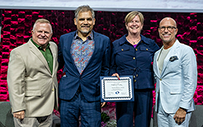
College of Liberal Arts Leverages Career Competencies for Postgraduate Success
In 2015, as part of a college-wide strategic plan, the College of Liberal Arts (CLA) at the University of Minnesota embarked on an ambitious journey to integrate career readiness into the undergraduate experience.
-

Hiring Flat for the College Class of 2026
Reflecting an uncertain job market for college graduates, employers are projecting just a 1.6% increase in hiring for the Class of 2026 when compared to the Class of 2025.
-

NACE Quick Poll: Use of AI by Career Centers to Help Students Is Growing
The use of AI in career centers to help students in their employment journey has grown substantially in recent years, according to results of NACE’s recent Quick Poll on Career Services Benchmarks.
-

Required Course at CSU Channel Islands Prepares Students for Transition to Career
In spring 2023, the California State University Channel Islands Martin V. Smith School of Business & Economics launched a career readiness course that all business and economics majors are required to take.
-

OSU Wexner Medical Center’s Internship Program Helps Students Thrive as They Start Their Careers
Since the creation of The Ohio State University Wexner Medical Center’s Buckeye Pathways Summer Internship program five years ago, career readiness has been a central priority.
-
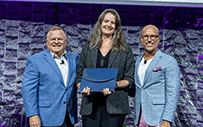
Verizon Program Immerses Potential Interns in Its Culture, Fosters a Sense of Belonging
Launched in 2024, “V Teamer for a Day” is an in-person experience at several key Verizon hub locations designed to immerse potential interns in the company’s culture and develop a sense of belonging.
-

Students Report Being Unfamiliar With Skill-Based Hiring
Students appear to be unfamiliar with the concept of skills-based hiring, despite being asked to demonstrate their skills and working to develop them, according to results of NACE’s 2025 Student Survey.
-

Career Fair Dashboard Informs Decisions at Carnegie Mellon
Carnegie Mellon’s Career and Professional Development Center created a custom Google sheet dashboard to track career fair registrations and provide information that helps staff drive toward goals.
-

Garver’s Intentional Recruiting Program Helps Firm Grow Despite Worker Shortage
In response to a national and extensive industry workforce shortage, Garver’s recruitment team has crafted a dedicated university recruiting program that ultimately serves as a pipeline for eventual full-time employees.
-

The New Jobs AI Is Creating and How It Will Impact Recruiting
AI is creating new job opportunities for college graduates, and higher education and employers can adjust the ways they operate and interact to ensure students are prepared for these roles.
-

Facing a Tough Job Market, Class of 2025 Responded Accordingly
Although the Class of 2025 faced a tough job market, they responded in ways that suggest they were aware of the challenges they were facing. A number of results from NACE’s 2025 Student Survey support this.
-

Moving Toward a Career Ecosystem at PLNU
The expectations of career services in higher education have never been greater. Families, students, and institutional leaders are asking tough questions: What support do you offer students in finding jobs after graduation? How will a degree translate into a meaningful career? What is the return on investment for a college education? The answers to these questions are complex, but they point to a broader shift in our field that calls for systemic transformation rather than incremental improvement.
-
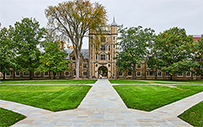
Campus Visits: Managing Recruiter Safety
Recently, a NACE member raised recruiter safety on campus. There are many ways recruiters and career services professionals can work together to prepare for and manage tenuous situations to ease the stress level of those involved and ensure the safety of all.
-

ASU Program Engages Families in Career Support
The winner of NACE’s 2025 Chevron Innovation Award, Arizona State University (ASU) Career Services partnered with ASU Family to develop a multi-model strategic communication and event plan designed to engage family members in support of their student's career journey.
-

Differential in Starting Salaries Between Bachelor’s and Master’s Grads Is Diminishing
Although there remains a salary advantage for college graduates earning master's degrees, the differential in starting salaries between bachelor’s degrees and master’s degrees among top majors is diminishing.
-

Employers Make More Offers as Student Acceptance Rate Rises, Response Time Shortens
Employers made more offers to candidates this year, but they took longer to make decisions about these offers, according to NACE’s 2025 Recruiting Benchmarks Report.
-

NACE Quick Poll: More Than 83% of Respondents Implementing Career Readiness Competencies
NACE’s Career Services Benchmarks Quick Poll reveals the progress colleges and universities are making in implementing career readiness competencies on their campuses.
-

The Problem With Professionalism
Despite all the information on hiring, it can be difficult to determine why some of our students are hired quickly and others are not. When interacting with students across majors and with different industry interests, career educators and recruiters often sum up behaviors expected on the job as professionalism, a tricky umbrella term that ignores the way that behavioral expectations may change from industry to industry—and can impact hiring decisions and new employee retention.
-

Guidance on Applying NACE’s Principles for Ethical Professional Practice to AI
A guide developed by the 2024-25 Principles for Ethical Professional Practice Committee applies the NACE principles to AI use in career services and recruitment, providing actionable recommendations to ensure responsible implementation.
-
Salas O’Brien Keeps Doors Open to Interns for Future Opportunities
Salas O’Brien clears common hurdles when trying to keep interns engaged during the academic year, such as being passive and assuming students will remember their internship experience without ongoing connection.
-

Employers Continue to Recruit in Fall but Adjust Timing of Offers
Employers continue to recruit in the fall but have made significant adjustments to the timing of their offers, according to NACE’s 2025 Recruiting Benchmarks Report.
-
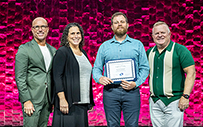
UConn Program Integrates Career Readiness Into On-Campus Student Employment
The large-college winner of the 2025 NACE Career Services Excellence Award, the UConn Work+ Pilot integrated career readiness into on-campus student employment, enhancing the experience for more than 200 student employees and 40 supervisors.
-

Staying Top of Mind When Your Interns Return to Campus
There are many strategies employers can use to maintain—and even strengthen—ties with their interns when they return to campus and throughout the academic year.
-

Maximus’ Internship Program Develops Future Leaders in Government Services
The Maximus Summer Internship Program is a mission-driven talent pipeline that advances workforce leadership and strategically engages with students to achieve excellent outcomes.
-

Average Starting Salary for Class of 2024 Shows Mild Gain
The overall average salary for new college graduates has experienced a slight uptick as the final overall average salary is up 2.2% over the Class of 2023’s average.
-

Managing Career Ecosystems: Thriving in Decentralized Career Centers
The “career everywhere” model can add a layer of complexity to the coordination of services, but career centers can thrive in models that are partially or fully siloed. In this article, author Chantelle Wright highlights the benefits and disadvantages of decentralized models, and provide strategies for success in career ecosystems (decentralized or not).
-

It’s Never Too Early for Career Development
As the needs of employers frequently change and potential career paths evolve along with them, students should begin working on career preparation earlier in their educational journeys.
-

Applying NACE’s Principles for Ethical Professional Practice to AI
For those in career services and early talent recruiting who are considering using artificial intelligence (AI) in their work, the Principles for Ethical Professional Practice Committee offers an ethical framework based on NACE’s Principles.
-

Coalition Issues White Paper to Promote Adoption of LERs
The goal of the LER Accelerator coalition and for the release of its recent white paper is to be a catalyst for faster growth of the adoption of learning and employment records.
-
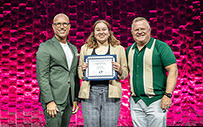
Kenyon Tech Program Rewards Students for Using Career Services
The college winner of the 2025 NACE Technology Excellence Award, the Kenyon College Career Development Office’s career rewards program incentivizes student use of career services in a way that makes it fun for the students and efficient for office staff.
-

GM Financial’s Social Media Strategy Tells Authentic Story of Its Intern Experience
The employer winner of the 2025 NACE Technology Excellence Award, GM Financial's intern social media strategy tells the authentic story of the firm’s intern experience and grows its pipeline of students for internships and early career opportunities.
-

Intern Offer and Conversion Rates Fall, Acceptances Rise
Offers to interns for full-time positions fell along with overall conversion rates even as acceptance rates rose, according to NACE’s latest internship benchmarks.
-

Redesigning Workplace Connectedness
Our workplace has become fragmented. Even with numerous options to connect and exchange information online, many professionals still experience a feeling of disconnection. Mentorship can restore workplace connectedness and belonging.
-

Strategic Positioning of Early Talent Recruiting
Learn how to transform your early talent recruiting program into a must-have strategic partner that delivers high-impact results. (Members Only.)
-

Infusing Purpose Into Job Crafting
There are no perfect jobs. The reality is, every job is what we make of it. There are better and worse jobs, roles that fit and those that don’t. Not everything we do in life will fit who we are or where we excel. As we work with students and employees to find places of best fit in response to this reality, we need to teach them how to job craft. However, job crafting needs to take on new depth if we are to truly help individuals craft worthwhile experiences out of their current and future work. Job crafting needs to start with purpose.
-

Summer Internship Experience Fills a Pipeline of Skilled Professionals
The small employer winner of the 2025 NACE Recruiting Excellence Award, heritage Moss Adams’ (now Baker Tilly) Summer Internship Experience is designed to build a strong pipeline of skilled career professionals who will elevate the profession and the firm.
-

Furman’s Four-Year Pathway Fosters Career Readiness for All Students
The small college winner of the 2025 NACE Career Services Excellence Award, Furman University developed its “Four-Year Pathway,” a program that spans students’ undergraduate career and prepares them to enter the workforce.
-

FBLA Competency Development Equips Students to Excel in First Jobs, Long-Term Careers
Future Business Leaders of America has integrated the NACE Competencies into its collegiate programming to bridge a critical gap between classroom learning and the demands of the modern workforce.
-

Majority of Employers Will Be Hiring for Full-Time and Internship Positions in Fall 2025
In positive news for the Class of 2026, nearly 87% of employers responding to NACE’s Job Outlook 2025 Spring Update survey said their organization will be actively recruiting for both full-time and internship positions in fall of 2025.
-

Their Words, Their Worries: A Grounded Look at Career Readiness From the Student Perspective
This article shares early findings from a three-year study on how students define and experience communication readiness as they prepare for the workforce.
-

NACE Members Weigh in on Mental Health and Well-being
In spring 2025, NACE conducted a follow-up poll to a 2023 survey to better understand the current mental health concerns of NACE members. In the latest poll, more than half of participants self-reported that their mental health was worse at the time of the poll than it was last year at the same time.
-

Half of Employers Have Roles That Offer a Degree Equivalency
There has been much discussion about whether a degree is necessary for every job. The answer is “no.” About half of employers responding to NACE’s Job Outlook 2025 Spring Update survey said their organization has positions that are flexible in terms of degree.
-

Artificial Intelligence and the Candidate Experience
Research conducted by Mary Scott shows candidates’ increasing “lack of enthusiasm” about employer use of AI as a screening tool.
-

LSU’s Talking Tiger Talent Sessions Spark Employer Engagement
The Olinde Career Center at LSU launched Talking Tiger Talent as a way to modernize and scale the center’s employer outreach efforts.
-

CSI Reliability and Validity
This piece offers details about the reliability and validity of the Career State Inventory (CSI).
-
Using the Career State Inventory to Evaluate Career Interventions
The Career State Inventory enables practitioners to evaluate career interventions.
-

Building Community and Belonging With Group Coaching
Group coaching prepares students for the world of work they’ll be joining. It also enables colleges to deliver career services more efficiently by allowing a smaller number of career staff to provide rich learning experiences at scale.
-

The Complementary Roles of Career Coaching and Career Advising: Striking the Balance
Far from being at odds, career coaching and career advising are complementary. Each offers distinctive advantages to help students navigate their career trajectories.
-

Using Technology to Amplify the Impact of Career Services
Career services offices are often seen as places that offer help with resumes and run career fairs—but their impact beyond that is lost. Data can help pain a complete picture.
-

How Execution and Authenticity Impact the Candidate Experience—and Employer Brand
Third in a series of articles focused on the candidate experience, this article by Mary Scott addresses how execution, authenticity, and the candidate experience shape the employer’s campus brand.
-

Recent Executive Orders and Policy Changes Affecting Higher Education and Employment
Since taking office, the Trump administration has issued dozens of executive orders, many of which affect institutions of higher education and employers. The executive orders related to diversity, equity, and inclusion (DEI); immigration; and related policy changes are the most consequential in this regard.
-
Volunteering for NACE Opens Doors
Volunteering with NACE can create uplifting opportunities to be involved with the changing workforce and allows members to learn skills needed to be a better director, professor, and a person.
-

ULN’s Four-year Plan Guides Each Student’s Journey Inside and Outside the Classroom
When the University of Texas University Leadership Network launched in 2013, it had two main goals that remain in place today: to help students graduate in four years and to provide students who are under-resourced with an opportunity to participate in various forms of experiential learning without having to work.
-

Job Stability, Healthy Workplace Culture Top New Grad Wish List
What do Class of 2025 college graduates want most in a job? According to NACE’s annual student survey, they are looking for stability. They also would like a healthy workplace culture and friendly coworkers.
-

Almost Two-thirds of Employers Use Skills-based Hiring to Help Identify Job Candidates
Almost two-thirds of employers responding to NACE’s Job Outlook 2025 Spring Update survey reported using skills-based hiring to help them identify candidates with potential.
-

Immersion Experiences Can Offer More Robust Connections Than Traditional Office Visits
The traditional office visit has evolved into an opportunity for an organization to give job candidates a glimpse into its culture and a vision for the candidates’ career there.
-

Early Career Talent and the Effects of Gender
NACE surveyed early career professionals about their experiences and attitudes; in this article, we examine the effects of gender on the experiences of early career talent.
-

Get to Know NACE by Getting Involved
Volunteering with NACE is a great way to learn how an organization works while also making lifelong personal connections and developing the skills needed to thrive professionally.
-

NDSU’s Town Halls Foster Deeper Connections With Employers
The North Dakota State University Career and Advising Center team has found that its Employer Town Halls held via Zoom are a great way to disseminate information in a different format than just an email.
-

Internship, Entry-level Job Modality Corresponds With Students’ Job Preferences
Hybrid and in-person remain the preferred work modalities of employers for both their overall and entry-level positions, which matches the ways students prefer to work, NACE research has found.
-

Hiring Projections Level Off for the College Class of 2025
Although overall hiring projections are up just 0.6% from last year, nearly 90% of employers anticipate increasing or maintaining hiring for the college Class of 2025, according to NACE’s Job Outlook 2025 Spring Update.
-
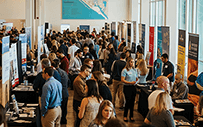
In-person Activities More Effective Than Virtual Ones for Recruiting Interns
In-person activities are the most widely used and effective means for recruiting interns, according to results of NACE’s 2025 Internship & Co-op survey.
-

Impacts of Experiential Learning on the Gen Z Early Career Experience
NACE surveyed early career talent—those who graduated in 2021, 2022, and 2023—to determine if (and how) experiential learning impacted their careers once they had graduated and landed in their first job. The results showed that those who took part in experiential learning while in college had higher rates of career satisfaction and a higher average salary than those who did not engage in experiential learning.
-

The Power of Showing Up: Why Volunteering with NACE Has Mattered to Me
It doesn't matter if you've been part of NACE for just a short time or for years, there are many ways to get more involved and contribute in ways meaningful to you.
-

Keeping Good Company by Getting Involved With NACE
Getting more involved with NACE is a great way for members to grow personally and professionally, especially for those who are new to their industry.
-

Helping Students Design Their Future With AI-powered Career and Life Design
The Career and Life Design process that Hassan Akmal created is evolving. Today, AI makes this pursuit more tangible than ever, acting as an unprecedented sounding board for self-exploration.
-

Developing Skills in Interns to Prepare Them for Their Careers, Bolster Conversion
Moving to skills-based hiring opens opportunity for a broader demographic of students to access positions where they otherwise would not meet the qualifications. Many employers include skills development in their internship programs to enhance their interns’ career readiness and bolster conversion.
-

More than 70% of Organizations Expect to Increase or Maintain Intern Hiring Despite Overall Dip in Hiring
More than 70% of organizations expect to increase or maintain intern hiring, according to NACE’s 2025 Internship & Co-op Report. However, overall intern hiring is expected to fall 3.1%.
-

Getting Involved As a Little Fish in a Large Pond
Large organizations can be intimidating, but getting more involved and finding your community within an organization can help you thrive both personally and professionally.
-
What I Have Learned: Insights From Leaders in the Profession (Part 2)
In the second of a two-part series, 13 NACE leaders offer their insight and guidance about what they have learned in their time in the profession.
-

Average Hourly Wage for Interns Exceeds $23
The average hourly wage for bachelor’s degree level interns has increased each year over the past 10 years and now stands at $23.04, according to NACE’s 2025 Guide to Compensation for Interns & Co-ops.
-

Career Center Budgets Climb 21% in Last Two Years
Career center budgets for the 2024-25 academic year have increased across the board since 2022-23, according to results of NACE’s 2024-25 Career Services Benchmarks survey.
-

Consistent Engagement, Multi-Level Relationship Building Vital for Reaching Internship Program Goals
To persist toward successful conversion of interns, organizations must not view engagement as a 10-week summer pursuit. Instead, engagement must gain momentum through recruiting and pre-internship, accelerate during the internship itself, and be maintained after interns return to campus.
-

UNF OspreyPro Program Targets Students’ Career and Professional Development Cycle
The University of North Florida (UNF) has historically offered innovative programs, services, resources, and events to ensure students are successful and career ready by the time they graduate. This approach led leadership to embark on a new path at the intersection of UNF’s core functions and NACE’s career readiness competencies.
-
Mastering LinkedIn: Useful Skills for the Job Search
LinkedIn can be a valuable tool for students preparing to enter the workforce, but it can also cause students to miss out on opportunities if not used responsibly.
-
How Gamified Guidance Revolutionized Student Engagement
By using a gamified approach to career development, college career services can create scenarios that simulate the workplace and encourage active student participation.
-

The NACE Take: Who Is the Early Career Gen Z Professional?
Understanding the experiences, preferences, and goals of the early career Gen Z professional will help employers craft meaningful experiences that will ultimately enhance productivity and retention, while career centers will be able to better guide their students.
-

Employers, Students Favor In-person Career Fairs
Attendance numbers reflect the preferences employers and students have for the format of career fairs, results of NACE’s 2024-25 Career Services Benchmarks survey reveal.
-

College of Arts and Sciences at IUB Constructs Pillars Experience to Equip Students for Career Success
The College of Arts and Sciences at Indiana University Bloomington recently launched its Pillars Undergraduate Experience, a framework designed to prepare students for academic achievement and lifelong career success.
-

Navigating Uncertainty: Career Services Leaders Share Effects of Recent Executive Orders
More than 200 senior career services leaders took part in a March 5 virtual meet up hosted by NACE to discuss effects of the Trump administration’s recent executive orders and “Dear Colleague” letter on the profession.
-
A Practitioner’s Guide to Defining Success
For many, success is shaped by external factors, but career services staff can help guide individuals to reflect on what success means to them through their own lens.
-

Latina Senior Executives Are the Secret Superpower for Your Organization
Research findings underscore the need for organizations to invest in enhancing recruitment and retention strategies for Latinas in senior executive roles.
-

Why Isn’t Anyone Calling Me?
Career services professionals must prioritize teaching students how to build social capital and cultivate ties within their chosen career fields.
-

Ensuring Data Are Protected, Results Are Accurate Keys for Maximizing AI Use
Among the main reasons why career center staff are not using AI with students are concerns about the technology collecting students’ personal data.
-

Accommodation, Adaptation Keys for Autistic Individuals, STEM Employers to Find Common Ground
The goal for employers should be to keep autistic employees from “hire to retire,” which is the ability to sustain these employees by providing them with the support they need to build their career in an organization.
-

Class of 2025 Engineering, Business Grads Expected to See Salaries Climb at the Master’s Level
Class of 2025 engineering and business graduates at the master’s degree level are expected to see salaries climb 12.5% and 3.1%, respectively, according to results of NACE’s Winter 2025 Salary Survey.
-

Relocation Assistance Yields Better Candidates for Internships
Relocation assistance may be the secret sauce to attracting top-notch interns.
-

Integrating Career Readiness Campus-Wide: First Steps
To compete in the job market, students must be able to connect their experiences to skills and communicate that to potential employers. Infusing skill development across campus can achieve that. Jill Donovan, Brookdale Community College, discusses how her career center began the process of integrating career readiness campus-wide.
-

Advancing Equal Pay and Pay Transparency
The Lilly Ledbetter Fair Pay Act of 2009 and pay transparency laws enacted by a number of states are helping to advance equal pay for equal or similar work.
-

What Is an Executive Order?
At the federal level, an executive order is a directive by the president as the head of the executive branch; such an order governs the actions of federal government officials and federal agencies.
-

Employment Brand Strength Key to Developing Campus Presence
By measuring employment brand strength, companies can identify areas to improve their employer brand, pinpoint strengths to leverage, and assess the effectiveness of their recruitment strategies, ultimately aiming to attract the best candidates and reduce hiring costs.
-

USC’s Career Connections Maximizes Impact of Networking Events
Networking is a valuable tool for students that offers both career exploration and access to opportunities, particularly in a competitive job market. To get the most out of its networking events, USC Viterbi School of Engineering Career Connections has taken them through several iterations to reach their current format.
-

AI in Career Services: Getting Started
There are two primary reasons that career centers might lack confidence in using AI in their work: speed and ethics.
-

Class of 2025 Salary Projections Mixed
Overall, starting salary projections for the Class of 2025 are something of a mixed bag as projected movement in salaries ranges from a gain of 2.8% for agriculture and natural resources to a decrease of 3.6% for the social sciences.
-
-
Latest Federal Update
Review the latest executive orders, shifts in regulations, and other actions that impact the work of career services and early talent recruiting professionals.
-

Key Steps for Hiring Autistic Job Seekers Into STEM Fields
When recruiting and hiring students with autism, it’s important for employers to train hiring managers so they understand how the hiring process might look different and adjust their criteria on how they evaluate candidates.
-

Competing for College Talent: What They Want and How to Give It to Them
Over the past five years—and maybe because they weathered the pandemic and got a giant taste of how quickly things can change—new grads’ wish list has largely reflected one thing: their desire for security.
-

Students Reveal Obstacles Preventing Them From Taking Internships
When students responding to NACE’s 2024 Student Survey were asked to identify the obstacles preventing them from participating in internships, their responses revealed they attributed their decision to a lack of time, concerns over pay, and scant opportunities.
-

Industry-HBCU Partnerships Built on Foundation of Understanding, Behavioral Change
The most prominent elements of a successful partnership between an HBCU and an employer are gaining understanding of challenges, demands, and goals and changing behaviors.
-

Key Factors Leading to Intern Conversion
There are several factors linked to the decision to convert for Class of 2024 graduating seniors, according to results of NACE’s 2024 Student Survey.
-

The Gap in Perceptions of New Grads’ Competency Proficiency and Resources to Shrink It
There is a clear and persistent disconnect between how students and employers perceive students’ development of the competencies they need to be career ready as they enter the workforce.
-

What I Have Learned: Insights From Leaders in the Profession (Part One)
In the first of a two-part series, 13 NACE leaders offer their insight and guidance about what they have learned in their time in the profession.
-

Aurora Career Services Uses ChatGPT to Help Prepare Students for Interviews
Aurora University’s career services office uses ChatGPT as a tool to help its students prepare for job interviews and teach them ethical ways to use generative AI.
-

Hyster-Yale Pre-onboarding Will Help Interns Feel Valued, Smooth Summer Onboarding
Hyster-Yale Materials Handling is developing a pre-onboarding program to engage and build excitement among its interns prior to their start date next summer.
-

What Are Employers Looking for When Reviewing College Students’ Resumes?
College students from the Class of 2025 looking to enter the job market should highlight on their resumes the attributes and skills they developed in their classwork and through their various experiential assignments. But which attributes and skills are most important to employers?
-
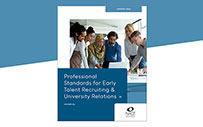
Professional Standards for Early Talent Recruiting & University Relations
Developed by a task force of early talent recruiting and university relations professionals for early talent recruiting and university relations professionals, the Professional Standards offer a roadmap to excellence for programs of all shapes and sizes.
-

How to Work With Students in the Arts
Supporting arts students isn’t easy, but career services professionals can help students find industry-related information, identify mentors, highlight the transferable skills their crafts have given them, and expand their view of themselves.
-

Understanding the Self-Perceived Career Barriers of Hispanic STEM Students
As students of color, including Hispanic students, are eager to attend higher education institutions and advance their economic wealth, many barriers hinder their academic success.
-

The Value of Relocation Assistance in Internship Programs
Data suggest that providing interns with relocation assistance correlates to better conversion rates for organizations that hope to turn interns into full-time hires.
-

The Validity of the NACE Competency Assessment Tool
Review the evidence for the reliability and validity of the NACE Competency Assessment Tool. This article also offers brief context for the assessment tool, outlines the methodology employed, and provides the final, top-line results of the study.
-

Hacking the Job Search Process
As a job candidate, students should pursue openings where their skills match the company’s needs, and by dissecting a job description and ensuring those key words find their way into their resume, students can stand out during the screening process.
-

Competency Implementation Helps Lehman College School of Business Develop Career-Ready Grads, Advance Toward Accreditation
To produce career-ready graduates, the Lehman College School of Business intentionally equips its students with competencies through the promotion of applied learning in its three programs.
-

Nearly Two-Thirds of Employers Use Skills-based Hiring Practices for New Entry-level Hires
Close to two-thirds of employers responding to the Job Outlook 2025 survey reported that they use skills-based hiring practices for new entry-level hires, and more than half use these practices always or most of the time in their hiring process.
-

Hiring Up 7.3% for the College Class of 2025
Hiring for the college Class of 2025 is expected to increase 7.3% over hiring for the Class of 2024, according to NACE’s Job Outlook 2025 survey.
-

Collaboration Is the Key to Disney’s Work With College Fund to Provide Career Exposure, Professional Development for Native Students
Disney provides resources to the College Fund to administer the latter’s scholarship program, called the Future Native Storytellers Program. Recently, a smaller group of program scholars was selected to receive additional enhancements to increase the awareness of opportunities at Disney for Native students.
-

Arup Engineers Expanded Career Readiness Programming for Its Interns, New College Hires
This past summer, Arup expanded its career readiness programming for summer interns by working with its internal learning and development team to implement a series of competency-focused workshops.
-

Class of 2023: Nearly 85% of Bachelor’s Grads Employed or Continuing Education Within Six Months of Graduation
Nearly 85% of Class of 2023 bachelor’s degree graduates and nearly 90% of master’s degree graduates were employed or engaged in further education within six months of graduation.
-

Nontraditional-Aged College Students and Career Preparation
While some of the experiences of nontraditional-aged students mirror those of their traditional-aged peers, there are important areas where they diverge. This information can help career service professionals and recruiters better serve this growing group of college students.
-

Data Collection, Analysis Help Murray State Career Services Tell Its Story
Matt Purdy of Murray State advises career services professionals to think about the resources they are trying to obtain and find data that not only align with what they are asking for, but to connect them to the priorities of their administration or institution.
-

The Uniqueness of Community College Students
Many community College students take a nontraditional path to higher education, which means career services staff need to ensure an individualized approach to supporting each student.
-

Students Considering Job Offers Look at Cost of Living as Top Factor to Relocate
Graduating students weighing job offers heavily consider the cost of living in each job’s location when making their decision, according to NACE’s 2024 Student Survey report.
-

Forté Addresses Barriers Preventing Women From Pursuing MBAs, Leadership Positions
Forté, winner of the 2024 NACE Business Affiliate Award for Excellence in Leadership, focuses its work on systematically addressing the barriers that prevent women from pursuing MBA degrees and business leadership positions.
-

More Than Half of Students Attended a Career Fair in the Past 12 Months
Career fairs are relatively effective means for students to convert connections into jobs, according to NACE’s 2024 Student Survey report.
-

It’s Important for Employers to Keep Lines of Support Open With Interns When They Return to Campus
Liberty Mutual has found that one of the most effective ways to maintain or strengthen connections with prior interns when they are on campus is to meet them where they are, such by hosting meetups, dinners, or coffee chats on or near campus.
-

Four Years Later: 2020 First-Year College Students are Graduating
Despite the changes caused by COVID-19, some employers and educators have reinstituted traditional recruiting practices that may now present barriers to students impacted by the pandemic.
-

Students Recognize the Importance of Gaining Internship Experience
The percent of graduating seniors who participated in an internship is the highest that NACE has recorded in the past six years, according to results of NACE’s 2024 Student Survey.
-

The Candidate Experience: Why Execution Matters
When done right, execution—meeting or exceeding students’ expectations throughout their candidate experience—helps drive success in early talent recruiting.
-

Georgia Tech Career Center Initiative Builds a Diverse Team and a Psychologically Safe Environment
The Georgia Tech Career Center, large-college winner of the 2024 NACE Career Services Excellence Award, hired eight new staff members across various functional areas within the office in a process that aligned with the institute’s DEI Blueprint to, in part, closely reflect the demographics of Atlanta.
-

Research Reveals Opportunity to Increase Faculty Awareness of Campus Resources
Because faculty are frequently asked by their current and former students for career advice, there is an opportunity to increase awareness among faculty of the resources available to them.
-

Class of 2023 Starting Salaries Show Considerable Growth
Salaries for college graduates overall continue to climb as, for the second straight year, the increase in average salary for a graduating class has surpassed 7%.
-

Recruiting Benchmarks: Budgets, Early Offers for Internships, and Retention of College Grads
There are interesting data points from NACE’s 2024 Recruiting Compensation Report in terms of budgets, internship offers, and retention that provide insight into the operations and approaches of URR functions.
-

Unpacking Productivity
With professional pursuits, quality invariably outweighs quantity, so career services staff should work with students to find good fits rather than trying to meet arbitrary deadlines.
-

Tips for Implementing AI Into Career Services Operations, Work With Students
Fear of AI has turned into curiosity, says Jeremy Schifeling, who reports seeing more and more career leaders getting excited about leveraging these tools for both their students’ and their own success.
-

As Employers Push Out Time From Interview to Offer, Student Response Time Holds Steady
Recruiters are taking more time to extend an offer to a candidate following an interview, but the deadline for acceptance remains close to two weeks.
-

Purposeful Career Planning: Transactional vs. Transformational Career Readiness
Shifts in the educational space dictate the need to revisit, revise, and reframe traditional practices to be relevant to the needs of current students.
-

Normalize “No” to Banish Burnout
My staff wants to go above and beyond. Unfortunately, wanting something and having the resources to do it are two different things. Acting as if we have the resources is harmful to the very staff who want to provide exceptional services.
-

Understanding Students’ Racialized Experiences With Career Services
One important question for career services staff who hope to support racial equity in their work: How does race and racism show up in the student experience?
-

How First-Generation College Students Can Use AI to Level the Job-Search Playing Field
AI can support first-generation students in the job search by bridging the gap in their professional network.
-

DOE Regulations Require “Adequate Career Services”
On July 1, 2024, as part of its regulations around financial aid, the U.S. Department of Education released regulations that apply to all higher education Title IV participants—including a requirement that schools offer “adequate career services.”
-

An Employer’s Guide to Navigating the Hiring Process
Employers may use multiple avenues to screen potential candidates. These include 1) creating the job description, 2) creating the written application, 3) conducting the interview, 4) determining which background screening methods to use, and most recently, 5) navigating the use of artificial intelligence (AI). Each contains potential legal liability for the employer if not conducted correctly.
-

Course Helps LAS Students Understand the Skills and Attributes Essential for Career Success
The University of Illinois Chicago, College of Liberal Arts and Sciences Career Development Office, winner of the 2024 NACE Career Readiness Excellence Award, designed an innovative eight-week, one-credit career strengths-based course for its students.
-

Global Atlantic Launched Early Career Recruiting and Internship Program to Address Workforce Needs
Global Atlantic Financial Group, the small employer winner of the 2024 NACE Recruiting Excellence Award, addressed a pressing need for increased diversity and innovation and a robust talent pipeline.
-

Salaries Climb for All Levels of Recruiting Professionals
Lifted by average increases that ranged between 3.5% and 4.4%, salaries for all recruiting professionals increased in 2023, while the majority of respondents at all levels received bonuses.
-

Gamification Can Be a Game-Changer for In-Person Events
The use of gamification apps at in-person events can be invaluable for individuals who may struggle to focus or interact in traditional settings.
-

NACE Quick Poll on Campus Protests and University Recruiting for Fall 2024
NACE is conducting a quick poll and would like your input to assess ways that campus recruiting may be impacted. Last spring, we saw increased campus protests and lockdowns in response to student activism. As we prepare for the fall semester and campus recruiting, there is a potential for increased campus unrest in response to global and national events (i.e. Presidential election, war in Middle East). This Quick Poll is intended to get an overall understanding of the ways university recruiters and campus career centers are preparing for possible campus unrest related to the recruiting process.
-

University of California, Berkeley Career Engagement Creates Data-Visualization Dashboard to Tell Its Stories
The college winner of the 2024 NACE Technology Excellence Award, University of California, Berkeley Career Engagement used Google Workspace products to create a data-visualization dashboard to tell its story in a low-cost, efficient manner.
-

Key Steps Help Freese and Nichols Strengthen “Earlier and Quicker” Strategy, Increase Hiring
The employer winner of the 2024 NACE Technology Excellence Award, Freese and Nichols implemented talent acquisition platform Yello and modified its roles and processes related to its on-campus career fair strategy to significantly increase its university hiring.
-

Intern Conversion Rate Fell, Fueled by Lower Offer Rate
The conversion rate for interns fell, fueled by a lower offer rate. The lower rate could reflect lower-than-expected hiring needs or could signal an issue with the intern selection process.
-

College Is Worth It: Class of 2024 Says College Prepared Them Well for Their Careers
Nearly 90% of the college Class of 2024 indicated that their institution prepared them for the next step in their career, according to results of NACE’s 2024 Student Survey.
-
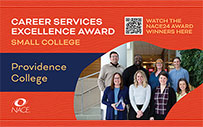
TV Show the Inspiration for Engaging Providence College Major-Selection Program
The small college winner of the 2024 NACE Award for Career Services Excellence, Providence College’s Chirico Career Center has created and honed an engaging program designed to help students as they consider their majors and explore potential careers.
-

For the LGBTQ+ Community, Allyship Requires Action
Although allyship with the LGBTQ+ community different for everyone, one thing is clear: It requires action.
-

Economic Security Tops Class of 2024 Wish List
The college Class of 2024 is looking for economic security in a job, according to results of NACE’s annual student survey.
-

Supporting the Unique Career Development Needs of Graduate Students
As the world of work continues to evolve, career development professionals must evolve their resources and services accordingly, based on the communities they serve. The school-to-work transition is common for both undergraduate and graduate students, but these two groups often have distinct career development needs, based on their identities, developmental stages, and life roles among other distinguishing characteristics. For colleges and universities to effectively promote the career success of their alumni, a customized approach will not only make services more accessible to graduate students, but more relevant as well.
-

How Students Should Not Use Generative AI in the Job Search
Career services professionals can help students use AI tools effectively and avoid common traps and mistakes.
-

Artificial Intelligence in the Preemployment Process
Using AI in the preemployment process can increase objectivity but can also increase the risk of discriminating against candidates.
-

A Year in Review for the NACE Liberal Arts Affinity Group
The NACE Liberal Arts Affinity Group reflects on its many accomplishments since last year's conference and looks ahead to next year.
-

Aligning Internship Programming, Experiences With Competencies a Natural Step for Northwestern Mutual
Northwestern Mutual shifting the focus of its internship program to development of career readiness competencies seemed like a natural progression since the company was already focusing on themes similar to those identified by NACE’s competencies.
-

Helping Faculty Understand the Impact of the NACE Career Readiness Competencies
The NACE Career Readiness Competencies can be a valuable tool to help faculty members demonstrate to administrators, students, and parents that what they do creates long-term value for students.
-

The Degree Continues to Be an Important Factor in College Recruiting
While nearly 20% of employers that responded to NACE’s Job Outlook 2024 Spring Update survey have had discussions about removing the college degree as a key requirement for entry-level positions, nearly 80% of respondents expect that there will be no change in the next two years.
-

UC San Diego Student Employment Program
The UC San Diego Student Employment Program employs more than 6,000 students who work in more than 170 departments across campus.
-
Reimagining Student Employment
Student employment can be a potent catalyst for transformative learning experiences, but is often relegated to the sidelines.
-

AuthenTECH Leverages Staff to Help Advance Equitable Career Outcomes for Students
Winner of NACE’s 2024 Diversity, Equity, and Inclusion Excellence Award for colleges, the Georgia Tech Career Center’s Georgia Tech’s AuthenTECH Partnership initiative leverages staff to provide population-specific resources, expand programming, and cultivate partnerships to advance equitable career outcomes.
-

Issues and Strategies of Using Artificial Intelligence to Create Cover Letters with International Students
Because of the potential challenges of using career services effectively, international students may turn to artificial intelligence for their career-related questions without fully realizing the possible negative outcomes related to it.
-

Career Progression Among Career Services and University Recruiting Professionals
Results of a NACE quick poll identify barriers and accelerators affecting the career paths of career services and university recruiting professionals.
-

Execution Is the Secret Sauce That Drives Successful University Recruiting Results
Providing a candidate experience that meets—or better yet, exceeds—students’ expectations is the “secret sauce” that drives successful results.
-

Landmark Helps Students With Autism Develop Skills and Strategies to Achieve Career Goals
Landmark College, an institution exclusively for students who learn differently including those on the autism spectrum, champions a strengths-based model and gives students the skills and strategies they need to achieve their goals.
-
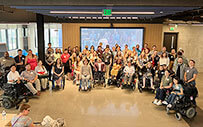
The Fehribach Center at Eskenazi Health Promotes Positive Career Outcomes for Students With Disabilities
Winner of the 2024 Chevron Innovation Award, the Gregory S. Fehribach Center at Eskenazi Health empowers Indiana college students with physical disabilities to achieve equitable employment following graduation.
-

Collaborating With Faculty for Successful Student Outcomes, Institutional Effectiveness
Faculty are a key source of career advice for students—with more than nine of out 10 saying students asked them for guidance in the past year, according to a new study conducted by NACE in collaboration with the American Association of Colleges & Universities and the Society for Experiential Education.
-

Intern Hiring Is Stable for 2024
Hiring for internships is expected to remain stable this year, according to NACE’s 2024 Internship and Co-op Report. Overall, eight out of 10 employers taking part in NACE’s annual benchmark report expect to maintain (47.2%) or increase (32.2%) the number of interns they bring in for 2023-24 compared to the 2022-23 academic year.
-

Power Skills Aren’t Just for Students
When it comes to advising students on the importance of professional skills, demonstrating those skills in your day-to-day can go a long way.
-

Job Outlook Spring Update: Overall Hiring Dips, But Most Employers Will Maintain or Increase Hiring
Nearly 83% of employers responding to NACE’s Job Outlook 2024 Spring Update survey anticipate increasing or maintaining hiring for the Class of 2024. This leaves just 17.4% of respondents planning to decrease hires, but their planned cuts mean overall hiring projections are down 5.8% from last year.
-
Liberty Mutual Implements Skills-Based Hiring Approach Creating Career Paths For Interns
Because Liberty Mutual Insurance hires hundreds of interns a year, it equips interns with a wide range of skills and has the skill profile of an intern closely align with its early career roles to prepare interns for potential future full-time roles.
-

Quick Poll: Do NACE Members Feel Like They Belong at Work?
Belonging at work—feeling that one is valued, accepted, and supported—helps to ensure a healthy, productive, and positive work environment. NACE surveyed its membership to better understand their experiences with belonging in the profession.
-

Spring Hill Starts Early, Meets Students Where They Are to Attain High FDS Knowledge Rate
For Spring Hill College, the work to attain a high knowledge rate on its first-destination survey begins in the fall.
-
Embracing Volunteer Opportunities Can Lead to Growth and Development
NACE offers many options to get involved, and those who choose their pursue volunteer opportunities can experience both personal and professional growth.
-
Embracing My Journey: From First-Generation Student to Early Careers Recruiter
Because all talent acquisition specialists have had their own unique journeys, embracing those experiences can help them better understand and connect with students.
-

Weaving Career Centers into the Fabric of Campus
Career centers that integrate into all parts of a student’s journey in college are better positioned to effectively serve students and demonstrate their value on campus.
-

CCC’s Microcredentials Tailored to the Realities of Its Student Body
Cayuga Community College’s career services office launched its microcredentialing program in 2018. Since then, it has been building microcredentials in the non-credit and credit side of the institution, including developing its microcredential program and updating it to an online learning platform.
-

Visa Internship Program Built to Promote Conversion
Visa’s internship program is designed to build full-time conversion and provide an exceptional experience for incoming talent. Phill Haig, Visa’s director of early career programs, says Visa’s target conversion rate has been 70%.
-

Tweaks in FDS Survey Process Lead to High Knowledge Rate at Roanoke
Despite achieving a knowledge rate of 90.6% on its most recent first-destination survey, the Roanoke College career center is tweaking the survey’s process to improve it.
-

Recruiters Make the Difference
Recruiters who foster a sense of belonging among potential hires have a positive impact on the candidate’s view of the organization.
-

The Strategies Centre College Uses to Attain a High FDS Response Rate
Centre College’s three-year average knowledge rate for its first-destination survey (FDS) stands at an impressive 98%. This is especially notable given that the survey wasn’t required for students until 2023.
-

Gender Pay Gap: Tips for Employers to Ensure Their Salaries Are Equitable
Consultant Katie Donovan offers tips for employers to eliminate the main causes of pay inequity for women, including that women are underpaid doing the same jobs as men and are underrepresented in leadership roles.
-

Hourly Wages for Interns Have Kept Pace With Inflation
Hourly wages for interns have kept pace with inflation, signaling the value of these programs to employers.
-
It’s Who You Know: Helping Students Grow Their Professional Networks
Because students may lack the professional network to get noticed, career services staff can help by leveraging their own networks to highlight students to potential employers.
-

The Impact of Providing Students With Greater Autonomy on Stress, Anxiety, and Project Management
A pilot study conducted among cooperative education students at University of Cincinnati tested the value of providing students with flexible due dates to help them manage their mental well-being and grow their project management skills.
-

Factors Contributing to Intern Conversion
Interns who feel committed to the organization because they were well treated are 7.14 times more likely to accept an offer of full-time employment.
-

Preferences for Job/Organization Attributes and Benefits Differ by Race and Gender
When it comes to the attributes of a job and an organization and the benefits the organization offers, there are some differences in student preferences by race and gender.
-

UD Listens to Students’ Wants to Achieve High Email Open Rates
The University of Dallas career development office listened to student feedback to pivot from texting students career-related information to sending messages via email. The results have been impressive.
-

Lessons (So Far) From a Former Dean of Career Success Turned Industry Insider
A former dean now working with hiring organizations offers five lessons for how higher ed can work with industry and move the needle for students—especially low-income and first-generation students.
-

For-Credit Internships Can—and Should—Be Paid
Some have the mistaken idea that credit means internship experiences can’t or shouldn’t be paid. Affecting all students but especially those struggling with finances, unpaid, for-credit internships require the student to pay for the credit and forgo a paycheck. Employers can and should pay their interns, regardless of whether the student gets academic credit for participating.
-

Understanding How Black Women Navigate Their Careers Using Funds of Knowledge
A study found that mentorship, community, biculturalism, and resilience are crucial resources and skills that Black women can use to advance their careers.
-

Propelling Pay Equity Forward: Strategies for a Fairer Future
Recent studies reveal that systemic barriers continue to limit progress on achieving pay equity for all, but there are tangible, proven ways that career centers and employers can make an impact.
-
How Can You Be Intentional About Your LinkedIn Engagements?
Students who begin building their social media presence while still in college will have an advantage after graduating, and there are several easy steps they can take to get started on LinkedIn.
-

UWF’s Career Toolkit, Best Practices Documents Address AI for Students, Career Coaches
The University of Western Florida CDCE recently launched its AI Career Toolkit to address AI use, challenges, and possibilities by students exploring careers and the career coaches supporting them.
-

Employers Slower to Make Offers, but Students Quicker to Accept Them
Employers were slower in making offers to their candidates for their full-time positions than they were prior to the pandemic, although students who accepted the offers were quicker to do so.
-
Hybrid Work Modality for Entry-Level Hires Matches Student Desires
Despite calls to “return to the office” from employers and the prevailing media narrative, the hybrid work modality appears here to stay.
-

Visa’s Internship Program Values Early Engagement, In-person Interactions
Visa has found that hiring diverse talent is easier to accomplish the earlier it can engage students and it helps create a network of brand evangelists who are able to advocate for Visa on campus.
-

Projections Point to Salary Increases for Class of 2024 Bachelor’s Grads
There is good news for the Class of 2024: Salary projections for all reported groups of majors are higher than the projections reported for the Class of 2023
-

August 2024 Federal Updates: Insights and Priorities
The latest federal updates will keep NACE members informed on how career services and recruiting are impacted by federal action, what developments can be expected, and opportunities available for them to weigh in.
-

Recruiters and Students Have Differing Perceptions of New Grads’ Proficiency in Competencies
Although new college graduates looking to enter the workforce and employers hiring these graduates agree on which competencies are most important for job candidates to hone, their perception of student proficiency in them differs.
-

Yale OCS Online Career Tool Applies Design-Thinking Principles, Is Open to Anyone
The Yale Office of Career Strategy enlisted the help of key partners to create an assessment tool that incorporates design-thinking principles and is available to everyone, not just Yale students and alums.
-
Generation Z in the Workplace
As Gen Z enters the workforce, there will be a shift in workplace culture and expectations, and employers who have embraced these changes have an advantage are positioned for success.
-

Career Services Working Group Addresses AI at Colorado Boulder
The career services office at Colorado Boulder launched an Artificial Intelligence Working Group to collect information on developments, discuss campus applications of AI, and more.
-
How to Help the Student Become the Professional
The classroom can be a valuable resource for students to develop the skill and mindset to think of themselves as professionals and describe how their skills relate to their field.
-

FDS: Outcomes Rate for Class of 2022 Bachelor’s Grads Returned to Pre-Pandemic Levels
After two relatively down years connected with the COVID-19 pandemic, the outcomes rate for Class of 2022 bachelor’s degree graduates returned to pre-pandemic levels.
-

Helping Students Harness the Power of AI to Spend More Time on High-value Career Work
UCSD’s Rady School Career Management Center is addressing and creating resources around AI to guide students in its effective, safest, and ethical use during the college recruiting process.
-

Career Services Has Positive Impact on Outcomes for Women Pursuing STEM Degrees
A joint research project by the National Association of Colleges and Employers (NACE) and Break Through Tech uncovered the positive impact career services has on outcomes for women in general and for women pursuing tech careers in particular. The research is detailed in “The Impact of Career Services on Women Pursuing Tech Careers,” which is free to the public.
-

Ensuring Students With Disabilities Can Access Your Workplace and Thrive Once There
To foster a truly diverse and inclusive workplace, employers should expand their DEI efforts to encompass what is increasingly being referred to as DEIA—or diversity, equity, inclusion, and accessibility.
-

Designing the Future of Career Services
In an ever-evolving landscape, career services needs to adapt and innovate. Here, Hassan Akmal discusses how career services can reimagine itself to meet the needs of students and alumni.
-
Strategic Approaches to Integrating Career Readiness Competencies
Strategic Approaches to Integrating Career Readiness Competencies, developed by the NACE Career Integration Task Force, identifies strategies and practices for integrating career readiness skills and competencies institution-wide and examines how career readiness informs skills-based hiring. The publication also identifies further areas for research.
-

LLMs, ChatGPT, and a Really Bad Idea
In this op ed piece, Chris Miciek discusses problems with jumping into AI without considering the consequences and urges we take the middle ground.
-

The Value of Higher Education
NACE President & CEO Shawn VanDerziel shares NACE research, which indicates that both employers and college students and graduates view higher education and the college degree as valuable.
-

Salaries Expected to Be Stable for Class of 2024 Bachelor’s, Master’s Graduates
Slightly more than 43% of employers plan to increase starting salaries to Class of 2024 bachelor’s degree graduates, and nearly all remaining employers anticipate keeping salaries at last year’s levels.
-

College Educations: If Graduates Had It to Do Over Again, Nearly All Would
New college graduates embrace the value of higher education, with 91% reporting that, if they had a chance to do it again, they would opt to pursue a college education.
-

Small Dip in Overall Hiring Projections for Class of 2024 Follows Record Job Growth
The small dip in college hiring revealed by NACE’s Job Outlook 2024 survey is down from the last two years, when the college job market experienced brisk growth that, in 2022, reached record levels.
-
The Impact of Career Services on Women Pursuing Tech Careers
This study, a collaboration between NACE and Break Through Tech, provides evidence that career services can help level the playing field for women pursuing STEM careers.
-

Employers Confirm Their Belief in Value of Higher Ed
Employers confirmed their belief in the value of higher education and higher education institutions in NACE’s latest benchmark survey.
-

McPherson Links Campus Jobs to Career Readiness Competencies
To make McPherson College students aware of the skills they are developing during their campus jobs, Amy Beckman incorporated career readiness competencies into student job descriptions and supervision.
-

Authenticity and Its Impact on Offer Acceptances and Reneges
Mary Scott compared data from 2016 to that from 2022 to gauge students’ assessment that an employer “made it seem as though they were interested in me.” What she found was astonishing.
-

Engaging Faculty the Key Component to Success of Georgia State’s Career Readiness Initiative
Getting faculty buy in, having liaisons in different departments, and having the faculty be program champions was the key to the success of Georgia State’s “College to Career” career readiness initiative.
-

Williams Shifts to Basing Intern Hiring and Development on Career Readiness Competencies
The Williams Companies evaluates talent for internships based on the NACE Career Readiness Competencies, focusing on the competencies where it has seen gaps in its intern class.
-

NACE Members Offer Tips on Increasing First-Destination Survey Response Rates
Career centers looking to increase FDS response rates might want to focus on communicating regularly with students, providing participation incentives, and ensuring the process is convenient for students.
-

Progressive’s Intern Hiring Process, Integration Instrumental in Achieving High Conversion Rate
Last year, Progressive Insurance achieved an intern conversion rate of 91%, far exceeding the overall conversion rate of 57.6% for 2021-22.
-

Supporting Women in Computing-Related Internships
Due to their underrepresentation in the classroom and societal messaging around technology being a “masculine domain,” women in computer science often feel isolated and marginalized. A study demonstrates how women’s experiences in computing internships shape their future career decisions; the findings have implications for both career development professionals and employers who recruit entry-level talent.
-

U.S. Supreme Court Strikes Down Affirmative Action in College Admissions: How the Decision Impacts Institutions of Higher Education
On June 29, 2023, in Students for Fair Admissions, Inc. v. President and Fellows of Harvard College and Students for Fair Admissions, Inc. v. University of North Carolina, the U.S. Supreme Court struck down the affirmative action policies at Harvard College and the University of North Carolina. The court’s decision striking down race-based college and university admissions policies and programs will have sweeping and immediate consequences for higher education throughout the country.
-

AI on Campus: A Look at Current Practice Among Career Services Professionals
The National Association of Colleges and Employers (NACE) polled its career services members in spring 2023 about their use of AI in their work and in their work with students.
-

Personal Branding for AI Interviews: Preparing Students for Success in New Recruitment Tools
Automated video interviews (AVIs) are an emerging recruitment tool. As success factors in AVIs may differ from face-to-face interviews, it is important for career services practitioners to know how to help their students prepare for these new types of interviews.
-

Work Modality: The Changing Nature of Where We Work
The research suggests that, long term, we will likely work in and out of the office. Research from the National Association of Colleges and Employers shows that new college graduates want to be in person at least part of the time, but also want the flexibility to work remotely some of the time.
-

PathwayU Offers Predictive Algorithm to Go Beyond Traditional Assessments
Not only does PathwayU offer student assessments, but it also provides guidance based on predictive knowledge that accounts for the user’s sense of purpose and meaning.
-

W&M’s Professional Development Academy Expands to Create Foundations Course, Evolves Into Week-long Event
While moving to a virtual world and with little experience using virtual tools, William & Mary career center staff connected students and alumni by creating the Professional Development Academy.
-

What Can Be Done to Shrink the Widening Gender Pay Gap?
Early data from a forthcoming NACE study indicate that the gender pay gap has widened over the past year, with female graduates now earning just 72 cents to every dollar earned by male graduates, down from around 81 cents.
-

The Class of 2023: Inequity Continues to Underpin Internship Participation and Pay Status
Data provided by more than 2,300 bachelor’s degree-level graduating seniors who took part in NACE’s 2023 Student Survey demonstrate that systemic inequities continue to exist in internships—not only in terms of who takes part, but also in terms of who gets paid.
-

What Do Students Gain From Internships?
Internships can provide students with valuable professional skills but also a professional network, which can be even more valuable upon graduation.
-

Success of Dominican University Business School’s Career Development Program Leads to Campus-Wide Initiative
Dominican University, a Hispanic-serving institution with 64% of students identifying as Latinx and located just outside of Chicago, launched its successful career development program in its Brennan School of Business in fall 2017.
-

Achieving Career Engagement at Scale
The Career & Professional Development office at the University of Denver developed a multipronged approach to work toward its ambitious goal to engage 90% of undergraduates annually.
-

Sparking Early Experiential Learning
The SPARK grant at Nazareth College is open to first- and second-year students to encourage and support early engagement in experiential learning.
-

Embedding Competencies Helps Ensure Students Develop Skills to Achieve Desired Career Outcomes
To prepare students for their transition to the workforce, career centers have to account for the standards of professionalism shifting over the past several years.
-

Cultural Wealth, Social Capital, And Career Outcomes: Black Alumnae In A Minority-serving Institution
A study at a minority-serving institution uncovers aspects of social and cultural capital that contribute to the college-to-career transition of Black undergraduate women.
-

DISH's Strategic Approach to "Recruit Once, Hire Twice" Yields High Intern Conversion Rate
The large-employer winner of the 2023 NACE Award for Recruiting Excellence, DISH’s “Recruit Once, Hire Twice” college recruiting process brings in top interns and works to convert them into full-time hires.
-

SALARY TRANSPARENCY LAWS AND CAREER CENTERS
Signed into law in 1963, the Equal Pay Act prohibits pay discrimination based on sex. However, 60 years since the passage of the law, women continue to experience a pay gap, relative to men.
-

Cultivating Connections, Adjusting To Shifting Landscapes Keys For Success In URR Profession
Among the key information recruiters need to know to successfully navigate their careers is to stay informed and value relationships.
-

Tulsa Community College Uses Social Media to Connect Students Across Its Campuses to Job Opportunities
Tulsa Community College’s “Job Market Monday” Facebook posts include information from employers about current local job openings or internship opportunities, each in a digital flyer format.
-

Conducting Effective Equity Audits Requires Asking Hard Questions, Planning to Address Findings
Research conducted by NACE and The Center for the Study of HBCUs underscores how important it is for companies to conduct audits to assess gaps and inequities in their recruiting efforts.
-

Alumni Gift Will Grow W&M Funding for Unpaid, Underpaid Internships
A new $1 million gift supporting career development at William & Mary will triple the number of students annually who can receive university funding for unpaid and underpaid internships.
-

Equity, Access Keys to Forging Partnerships Across Campus for New UT Austin Career Center
The University of Texas at Austin (UT Austin) is a public Research 1 university with 52,000 students and 18 colleges and schools, including medical and law schools. Like many large universities, UT Austin has a highly distributed model of 15 career centers within schools, and each area operates independently.
-

Elevating Career Development Within Your Campus Culture
Clarion University was part of a historic integration within the Pennsylvania State System of Higher Education (PASSHE). Since 2020, Clarion, California, and Edinboro Universities of Pennsylvania have worked to plan and execute the integration of their three unique, standalone universities to one shared model. As of July 1, 2022, we became Pennsylvania Western University (PennWest).
-

The Value of Career Services
NACE’s research shows that career services has a quantifiable effect on students and their entry into the world of work. It’s hardly a new question: Over the years, many career services professionals have been asked to respond, often when budgets are tight and administrators are looking for where to make cuts, but even when that’s not the case.
-

Alignment Shift Gives LaGuardia Career Services Access to More Resources, Industry Partnerships
During the pandemic in 2020, LaGuardia Community College—a public community college that is part of the City University of New York (CUNY) system—inaugurated a new president, who is an advocate for workforce development as well as for internships. In addition, the chancellor for CUNY established career services as one of his priorities.
-

Grant From UNCF the Catalyst for Elevation of Career Services at Tougaloo
A grant from the United Negro College Fund (UNCF) helped to move career services to a position of more prominence at Tougaloo College and embed career readiness in the school’s curriculum.
-

SAXBYS BREWS UP EXPERIENTIAL PROGRAM STRONGLY INFUSED WITH COMPETENCY DEVELOPMENT
Through its Experiential Learning Platform™, Saxbys builds individualized academic partnerships to open cafes that provide exceptional paid experiential learning opportunities for students.
-

New Division at Michigan State Adds Research Component to Career Services
Career services at Michigan State University (MSU) is a centralized/hybrid organization of offices and is well-known for its Career Services Network, which is composed of career services professionals strategically located in central and college-based offices.
-
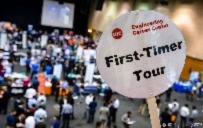
Job & Internship Fair Tours Help First-Gen Students Become More Comfortable Navigating Event
The University of Illinois at Chicago College of Engineering Job & Internship Fair Tours were created to engage more first- and second-year students in job fairs and to reduce barriers to attendance.
-

Shift to Advancement Allows W&M Career Center to Support Students and Alumni in New Ways
William & Mary (W&M) has recently undergone a shift that has elevated career services, alumni engagement, internships, and applied learning at the highly selective, Research 2, public, residential research university.
-

Addressing the Prevalence of Mental Health Issues in Young Professionals
College graduates in their early professional careers report significant mental health issues and view their jobs as a contributing factor. How can employers and colleges provide support?
-

Gen Z: Entrepreneurship, Passion, Self-Branding and the Shift to Personalized Work
In terms of their career interests and goals, members of Generation Z have an increased appetite for and awareness of entrepreneurship.
-
Positioning Career Services as an Institutional Strategic Priority
Career services needs to be strategically positioned on campus to provide the vision, guidance, and relationships to demonstrate its importance and value and to maximize student outcomes.
-

IBM Accelerate Reinvents Virtual Learning Opportunities for Underrepresented College Students
After witnessing the impact that the pandemic had on early undergraduate students from underrepresented groups in the tech industry, IBM scaled up its early talent ID program.
-

Reporting Directly to President a “Best-Case Scenario” for Grinnell’s Dean of CLS
Soon after Mark Peltz was hired as the associate dean and director of career development at Grinnell College, it began a process of institutional elevation and prioritization of career services.
-

Exploring the Influence of Course-Based Career Experiences and Faculty on Students’ Career Preparation
The effective preparation of college students for careers is an important college outcome. Yet, employers and the public increasingly feel that universities are not doing enough to prepare students for the workforce
-

Average Hourly Wages for 2020-21 Interns, Co-ops Identical at $20.82
The average hourly wage for 2020-21 bachelor’s level interns and co-ops was identical at $20.82, according to results of NACE’s 2022 Internship & Co-op Survey Report.
-

Hybrid Model Is Employers’ Favored Modality for Internships
Regardless of how employers ran their programs in summer 2021, the hybrid model is their favored modality for their 2021-22 internships, according to NACE’s 2022 Internship & Co-op Survey Report.
-

Setting Up a Campus Champion Model
An employer looking to set up a “campus champion” program as an element in its campus recruiting efforts turned to colleagues in the NACE Community for ideas on staffing, the responsibilities and expectations of the program, and the guidelines for campus engagement.
-

Predicting Interns’ Intentions to Convert
Internships provide employers an opportunity to identify talent early: Indeed, according to NACE’s 2019 Recruiting Benchmark Survey Report, nearly all respondents (94 percent) said it was very or extremely important to identify talent early through internships.1
-

Calculating and Using an Interviews-Per-Hire Average
Interviews-per-hire average (IPHA) is the average number of interviews conducted with each college hire. IPHA is a deeper analysis to determine the variation of recruiting processes across positions or sourcing channels.
-

Calculating and Using an Applicant-to-Hire Ratio
The applicant-to-hire ratio (AHR) is the average number of applicants for each college hire. AHR can be used to determine the relative interest for various jobs. In general, a higher AHR reflects the general interest in an organization’s opportunities; however, a low AHR may indicate a better efficiency for applicant conversion.
-

Calculating and Using an Intern-to-Full Time Conversion Rate
Tracking, analyzing, and acting on key metrics is critical to the success of a recruiting operation. One of these key measures for assessing the effectiveness of your organization’s internship program is tracking its intern-to-full time conversion rate.
-

Calculating and Using Interview-to-Offer, Offer-to-Acceptance Rates
Tracking, analyzing, and acting on key metrics is critical to the success of a recruiting operation. Some of the most basic metrics are the interview-to-offer and offer-to-acceptance rates. These can help you identify problems—and successes—in your recruiting operations both with full-time hiring and intern/co-op programs.
-

Ethical Considerations for Using AI in College Recruiting
Two critical factors for limiting bias in AI systems are building diverse AI teams and implementing an enterprise-wide trustworthy AI framework.
-

Career Centers Continue to Shift Away From Student Affairs
Over the past 10 years, there has been a clear shift away from housing the career center in student affairs.
-

Preemployment Drug Testing and the Legalization of Medical and Recreational Marijuana
Historically, employers conducted preemployment drug testing to promote a drug-free work environment and safe working conditions for all employees. Applicants who tested positive for prohibited substances, including marijuana, were generally excluded from further consideration for employment. However, as more states legalize the use of medicinal or recreational marijuana, employers are facing difficult decisions regarding their preemployment drug testing policies.
-

Overcoming Employment Challenges in Rural Areas: The Transformational Employer Engagement Strategy
The Center for Career Development at the University of Charleston is working to engage employers by transforming transactions into relationships.
-

Why Authenticity Is Essential to an Impressive and Effective Candidate Experience
Students’ expectations around authenticity in recruiting have remained constant, but the pandemic created job-search challenges that affect how they assess employers and their opportunities.
-

Using FDS to Benefit Your School and Demonstrate Value of Higher Ed
Schools that conduct an annual FDS to capture information on how their new college graduates fare following graduation can benefit their own institutions and demonstrate the value of higher education.
-

Getting the Most Out of Intern Surveys
NACE offers suggestions for getting the most out of your organization’s intern surveys.
-

Maintaining and Handling Protected Data
This article discusses maintaining and handling protected data, including how to an internal or third-party breach.
-

Case Study: Employer Access and Partnerships
An employer has a partnership arrangement with a career center and wants special access to diverse students. How does the career center balance its relationship with the employer and its responsibilities to students?
-

Case Study: Student Activism and Employer Access
A senior university official requires the career center to bar a specific employer from on-campus recruiting events due to possible protests.
-
Rubric for Responding to Ethical Dilemmas
The rubric models the Principles Committee’s process in addressing requests for advisory opinions and can help career services and recruiting professionals address ethical dilemmas.
-

Best Practices for Recruiting New College Graduates
Eight best practices provide a foundation for organizations that are focused on recruiting and hiring new college graduates.
-
NACE Center: Current Research on the Impact of Internships
Free downloads from the NACE Center: These studies examine how internships impact the development and initial career outcomes of college graduates.
-

Principles for Ethical Professional Practice
NACE’s Principles provide everyone involved in the career development and employment process with an enduring ethical framework on which to base their operations and interactions.
-

A Faculty Guide to Ethical and Legal Standards in Student Employment
The guide provides faculty with information about the ethical and legal implications associated with referring students for internship and employment opportunities.
-

Paid Interns/Co-ops See Greater Offer Rates and Salary Offers Than Their Unpaid Classmates
Students who took paid internships or co-ops were more likely to receive an offer of full-time employment and a higher salary offer from their employers than were students who took unpaid internships or co-ops, according to results of NACE’s Class of 2015 Student Survey.
-

Case Study: When Faculty Refer and Rank Students for Employers
This case study by the NACE Principles for Ethical Professional Practice Committee addresses the ethical issues involved when faculty refer and rank students for employers and offers recommendations for how career center staff can resolve the issues.
-

Key Items to Document for Your Internship Program
Document aspects of your organization’s internship program on an ongoing basis to, among other things, help you clarify what you do, how you do it, and why you do it.
-

Best Practices for Internship Programs
NACE offers best practices for internship programs that feed full-time hiring, including recommendations for work assignments, work arrangements, housing and relocation assistance, and program management.
-

Sample Faculty Reference Letter
Sample Faculty Reference Letter Dear [Name of Employer]: This reference letter is provided at the written request of [name of student], who has asked me to serve as a reference on [his/her] behalf. It is my understanding that [name of student] is being considered by your organization for the position of [job title].
-
NACE’s Professional Competencies for College and University Career Services Practitioners
Gauge your professional expertise in key areas. Develop meaningful professional development plans for yourself and your staff. Build job descriptions around critical skills and attributes. Developed by a task force of career services professionals for career services professionals, the competencies will help you gauge and assess the career services staff at your institution.
-

Marijuana in the Recruiting and Hiring Process
Given the complexity and variety of laws, it is not surprising that employers, applicants, and career services professionals alike are confused about what is and isn’t legal in the case of marijuana—medical and recreational. This article addresses marijuana use as it pertains to some of the most pressing questions surrounding recruiting and hiring.
-
Competencies for University Relations and Recruiting Professionals
The NACE Competencies for University Relations and Recruiting Professionals identify critical skill sets for URR staff across levels; coordinator/assistant, campus recruiter, campus manager, program/function/business manager, and enterprise manager.
-

Development of the First-Destination Survey Standards and Protocols
NACE’s First-Destination Survey Standards and Protocols were developed by a task force of practitioners, and reflect feedback provided during a public comment period by more than 100 career services professionals. The standards/protocols are designed to address the needs of individual institutions to track graduate outcomes, and can be used to address growing demand by accrediting bodies and governmental agencies.
-
Employers Identify Four “Must Have” Career Readiness Competencies for College Graduates
When asked to rate the career readiness competencies of college graduates in terms of “essential need,” employers view four as vital, according to results of NACE’s Job Outlook 2016 Spring Update.
-

Glossary of Disability-Related Terms
A NACE task force developed a glossary of terms relevant to supporting individuals with disabilities.
-

Avoiding the Potential Pitfalls of the Hiring Process
Attorneys George Hlavac and Edward Easterly discuss potential pitfalls in the application and interview for applicants and employers.
-

Individuals With Disabilities: Resources
This list, compiled by a NACE task force, offers information about and links to a variety of resources.
-

Unpaid Internships for International Students: Risky Business
Unpaid internships can put international students at risk of violating their immigration status.
-

Harassment in the Workplace: What Employers, Employees, and Interns Need to Know
What constitutes harassment? How are employers required to respond? What should employees do if they believe they are being harassed? Are unpaid interns protected?
-

Restrictive Covenants: Noncompete, Nonsolicitation, Nondisclosure Agreements
Employers may require new hires and interns to sign restrictive covenants, such as noncompete, nonsolicitation, and/or nondisclosure agreements. Attorneys George Hlavac and Ed Easterly discuss the issues.
-

Case Study: Whose Data Is It Anyway?
A career center compiles first-destination survey data; other offices on campus want access to the raw data.
-

Fraudulent Employers: Tips for Career Centers and Students
Career centers and students must be vigilant about fraudulent employers and should identify steps to take to verify the legitimacy of an employer.
-

Advisory Opinion: Working With International Students
This advisory opinion from the NACE Principles Committee addresses concerns many career centers have in working with international students who are limited by work authorization restrictions.
-

Index: NACE Principles for Ethical Professional Practice and Ethics-Related Resources
Use the index to find case studies and advisory opinions related to specific NACE principles, and to match up NACE principles to ethics-related resources.
-
The Professional Standards for College & University Career Services
Revised—The Professional Standards for College & University Career Services were created by members for members to guide excellence in career services operations.
-
Advisory Opinion: Managing Data Security With Technology Providers
This advisory opinion, developed by the NACE Principles for Ethical Professional Practice Committee, offers guidance on working with technology service providers in managing data security.
-

International Student Employment: Answering Questions About the Need for “Employment Visa Sponsorship”
Immigration attorney Mark B. Rhoads answers several critical questions about international students navigating the visa sponsorship process.
-

Native Student Engagement and Recruitment Resources
Developed by the NACE Tribal Colleges & Universities Affinity Group, this resources includes insights to consider in engaging Native American students and provides links to a variety of Native American organizations.
-

The Value of Intentional Cross-Identity Mentorship: Examining the Benefits of Shared and Differing-Identity Mentors
There are benefits to engaging with a mentor with whom you do not share an identity.
-
Personal Insights From the Authors
Philip Wilkerson, III and Samara Reynolds, authors of “The Value of Intentional Cross-Identity Mentorship,” share their personal insights about mentorship.
-

How to Write a Reference Letter
This article provides guidelines for those writing reference letters, including questions to consider and legal and liability issues.
-

Advisory Opinion: Requiring Logins, Passwords Violates NACE Principles for Ethical Professional Practice
Employers should not require a candidate’s social media account logins or passwords; it violates NACE’s ethical principles.
-

Salary Trends Through Salary Survey: A Historical Perspective on Starting Salaries for New College Graduates
Using NACE’s Salary Survey report, Andrea Koncz offers a historical perspective on starting salaries to new college graduates from 1960 through 2015. The overall economy, corporate scandals, new legal requirements, the dot-com bubble and burst—a variety of factors have affected the rise and fall of starting salaries for new college graduates over the past half century. Overall, in real terms, bachelor’s degree level salaries have risen 5.9 percent since 1960.
-

Case Study: A Question of Equitable Access to Internship/Employment Opportunities
This case study illustrates issues that career centers and employers face in providing students with equitable access to services and opportunities.
-

Career Readiness Resources
NACE members share resources they have developed to communicate with college students and others about how to develop key competencies, known as the NACE Career Readiness Competencies, needed to be considered ready for the workforce.
-

U.S. Supreme Court Upholds University of Texas Admissions Plan
In a 4-3 decision, the U.S. Supreme Court upheld the affirmative action admissions plan at University of Texas. The case, Fisher v. University of Texas at Austin, revolved around race in the admissions process. The University of Texas system provides for race to be considered as one factor in admissions.
-

Legal Issues: Marijuana in the Workplace
The legalization of recreational and/or medical marijuana in many states raises a series of issues for employers and employees alike. How are drug testing policies affected? Must employers accommodate use of marijuana for medical purposes? What does legalization mean for federal contractors?
-

Legal Issues: References
The key for reference providers is to know what information should and can be disclosed, and what legal ramifications arise as a result of improper disclosures.
-

FERPA Primer: The Basics and Beyond
Career services professionals should know the key points of the Family Educational Rights and Privacy Act (FERPA) and how they can ensure their institutions are in compliance with FERPA’s requirements.
-

Legal Q&A: Can a student or new graduate volunteer to work unpaid for an employer to gain experience?
Although some recommend a student or new graduate volunteer to work unpaid to gain experience, it is illegal for-profit organizations to have “volunteers” perform work.
-

Legal Issues: Internships
There are a number of laws and regulations governing internships, including whether an intern is classified as an employee. Others cover compensation-related issues—including whether an intern can be paid if they receive credit—workplace safety, employment agreements, and more.
-

Can a Career Center Prescreen Candidates for an Employer? Can Faculty Prescreen for an Employer?
Many career services professionals are asked to prescreen candidates for employers—to identify their “best” students. So, too, are faculty members. Beyond a host of ethical issues involved in such a request, there are legal implications.
-

Salary Projections for Class of 2022 Bachelor’s Grads a Mixed Bag
Average starting salary projections for the Class of 2022 range from an increase of 5.4% to a decrease of 14.8%.
-

Internship Experience the Most Influential Factor in Tough Hiring Decisions
When choosing between two otherwise equally qualified candidates, employers deem having internship experience—with the organization or within its industry—to be the most influential factors.
-

Legal Q & A: Are employers required to interview international students?
Employers are not required to interview an international student who has an F-1 or J-1 visa, even if the student is otherwise qualified for the job. Although employers can refuse to interview or hire international students who do not already have some form of permanent work authorization, most cannot stipulate that U.S. citizenship is a job requirement.
-

Case Study: When a Student Reneges on a Job Acceptance
After accepting a job offer, a female student of color learns the company has a poor reputation with women and Hispanics; she reneges on her acceptance and accepts a offer from another firm. How does the career center address the ethical issues and the employer’s concerns about the student reneging?
-

Case Study: When an Employer Rescinds a Job Offer
A student accepts a job offer and withdraws their candidacy from other companies; the employer rescinds the job offer a month before the job’s planned start date, leaving the student with no job and no on-campus access to other employers. What are the ethical issues involved? What can the career center, student, and employer do?
-

Advisory Opinion: Career Centers Should Not Select Students for Employers
In this advisory opinion, the National Association of Colleges and Employers explains that career centers should not select students for employers to interview for jobs or internships and reviews the ethical underpinnings of that opinion.
-

Case Study: Confidentiality of Student Advising/Coaching
A student’s identifiable demographics are sent via email by career center staff and shared with others outside of the university. Besides the legal implications, such a scenario has ethical implications, which are addressed by the NACE Principles for Ethical Professional Practice.
-

Advisory Opinion: Rescinded and Deferred Employment Offers
Rescinding a job offer or acceptance is unfortunate and should only happen in rare instances. This advisory from the NACE Principles Committee considers the relevant ethical issues.
-

Relationships Between Workers and Hiring Organizations
In today’s marketplace, college students may be offered a wide variety of employment opportunities. The following information should help career services professionals advise their students on the nature of these opportunities.
-

Advisory Opinion: Supporting Appropriate Recruitment and Employment Practices: Guidelines for Career Center Staff
By supporting appropriate recruitment and employment practices, career services can play a key role in ensuring positive connections between employers and students. Career centers should develop policies that govern an employer’s access to their institution’s students for employment recruitment purposes.
-

Advisory Opinion: Setting Reasonable Deadlines for Job Offers
The timing of job offers and acceptances is market-driven. NACE encourages employers to set reasonable deadlines that work for their organizations and students.
-

Recruiters and Students Have Differing Perceptions of New Grad Proficiency in Competencies
New graduates and their potential employers can agree on which skills are most important for job candidates, but differ on how proficient new graduates are in those abilities.