Join/Renew




The UConn Work+ Pilot integrated career readiness into on-campus student employment, enhancing the student employment experience for more than 200 student employees and 40 supervisors. This is important, says Eran Peterson, UConn’s associate director for Work+, because student employment often lacks structured opportunities for professional growth and alignment with career competencies, leaving students underprepared for future careers.
"We developed the Work+ Pilot to address this gap by integrating intentional career readiness development into on-campus employment,” Peterson says.
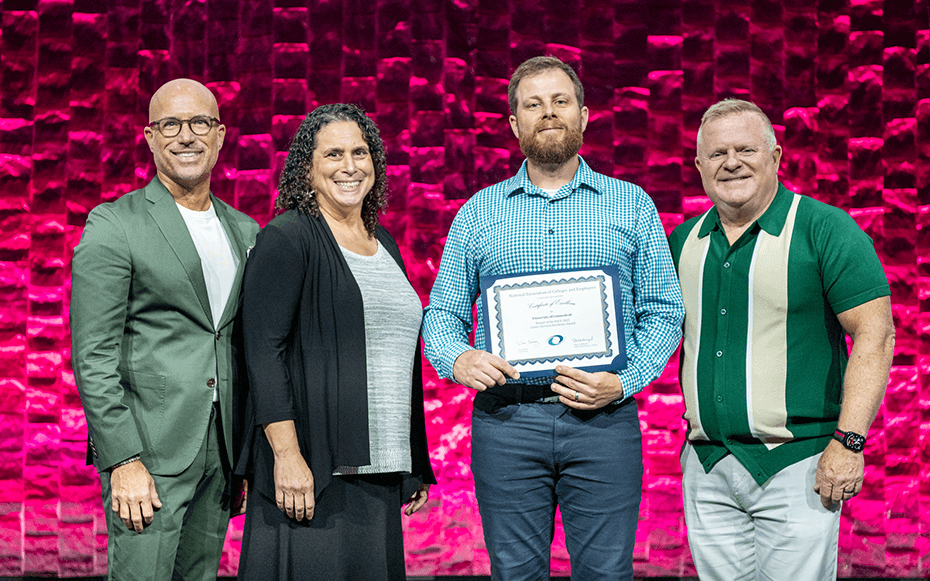
NACE AWARD WINNER
The large-college winner of the 2025 NACE Career Services Excellence Award, the UConn Work+ Pilot integrates career readiness into on-campus student employment, enhancing the experience for more than 200 student employees and 40 supervisors. For more information about the NACE Awards program, see www.naceweb.org/about-us/nace-awards/.“By aligning work experiences with NACE Career Readiness Competencies, the program fosters skill-building, career exploration, and stronger supervisor-student collaboration.”
The Work+ Pilot program aimed to:
- Enhance career readiness and competencies—It enables students to develop self-awareness about their career development journey by setting working learner goals and assessing their progress in career readiness and the NACE Career Readiness Competencies.
- Foster a sense of belonging—It builds a supportive workplace culture where students recognize their contributions to the department's mission/vision through mentorship, collaboration, and community engagement.
- Promote workplace skill development—It equips students with foundational workplace skills, such as communication, teamwork, and professional feedback, and connects these skills to their roles and departmental goals.
- Strengthen supervisory practices—It creates a community of supervisors dedicated to mentoring students, fostering inclusivity, and standardizing supervisory practices to ensure consistent expectations for all working learners.
- Cultivate a positive workplace environment—It encourages active participation in team initiatives, mentorship, and collaborative relationships between supervisors and peers, contributing to a cohesive and supportive workplace culture.
The Work+ Pilot embedded career readiness into on-campus student employment by offering curated, compensated professional development for 200 working learners and providing robust resources for supervisors. Students received one hour of paid professional development per month, delivered through Blackboard, covering topics such as:
- NACE Career Readiness Competencies and their alignment to roles and future goals;
- Rights and responsibilities as a student employee;
- Career and major exploration; and
- Resume development.
Each module included interactive lessons, assignments, and feedback surveys to measure engagement and effectiveness. In addition, more than 40 supervisors benefited from a comprehensive set of resources designed to support student success. These included:
- A customizable learning roadmap to onboard and guide working learners;
- Templates for job descriptions, offer letters, and student employee handbooks; and
- Ongoing training sessions.
“Regular check-ins with supervisors ensure consistent implementation and address challenges, fostering a culture of mentorship and collaboration,” Peterson explains.
“By combining structured professional development for students with tools and training for supervisors, Work+ creates a cohesive framework that enhances career readiness, strengthens supervisory practices, and aligns work experiences with future goals. The program cultivates an environment where students and supervisors collaborate to build workplace skills and foster a supportive, growth-oriented culture, aligning with UConn’s mission to provide impactful on-campus employment.”
The evaluation of the Work+ Pilot used a mix of quantitative and qualitative methods to assess its effectiveness and impact. Key findings included:
- A 93% increase in NACE Competency awareness;
- A 32% increase in the number of supervisors encouraging professional development;
- A 51% improvement in supervisors fostering a positive work environment;
- A 26% increase in supervisor interest in working learner career goals;
- A 67% increase in students’ comfort seeking help from supervisors; and
- A 10% increase in working learners feeling like a valued member of the team.
“The Work+ Pilot demonstrated measurable outcomes that enhanced both student and supervisor experiences,” Peterson says.
“Supervisors reported feeling more equipped to mentor students and appreciated the structured approach, which supported more equitable supervision and hiring practices. Many noted the resources and professional development modules made onboarding and mentoring more effective. Two students who experienced both Work+ and non-Work+ roles proactively advocated for their non-Work+ supervisors to join the program, highlighting its positive impact.”
Based on feedback received, the UConn Center for Career Development implemented several changes for the spring semester to better meet the needs of both supervisors and working learners. For students, the center introduced a menu of professional development tracks, each containing five lessons, to tailor their learning experiences. Tracks included:
- Students Exploring Career Options;
- The Internship Search;
- The Job Search;
- Preparing to Enter the Workforce; and
- Graduate School Preparation.
For supervisors, the UConn Center for Career Development launched monthly mini-training sessions led by peer supervisors to enhance their skills and build a stronger community of practice.
“These changes reflect our commitment to continuous improvement and demonstrate how Work+ remains responsive to feedback, ensuring that it meets the evolving needs of all participants while advancing career readiness and equitable workplace practices,” Peterson says.