Join/Renew





The Class of 2026 is entering a job market that is still shifting—shaped by AI, a growing emphasis on skills, and changing expectations for early talent. The good news? The outlook is a little brighter than it was for last year’s graduates,
with employers projecting hiring to increase by about 5.6%. Still,
economic uncertainty remains part of the backdrop.
As a result, it’s not surprising that this year’s graduates are thinking carefully about what they want from an employer. As the figure below shows—and similar to what we saw in the past two graduating classes—their top priorities point to a desire for stability, support, and room to grow.
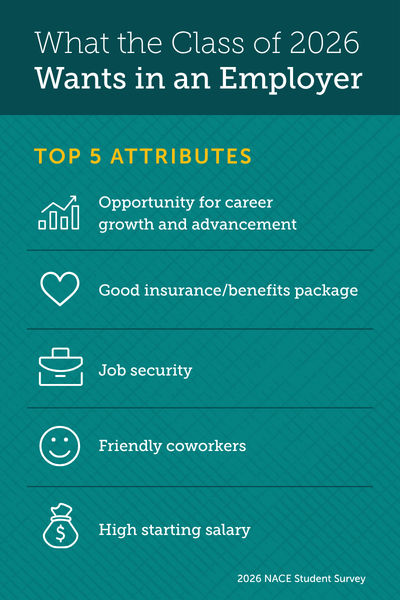
What does this tell us? First, that the Class of 2026 appears to be playing the long game. They are not just looking for a first job; they are looking for a strong start.
They want employers that will invest in them and their future. Career growth is especially important, which means employers need to show clear pathways for advancement, provide meaningful support, and help early talent see how they can build a future
within the organization. Doing this well can also support retention and long-term commitment.
They are also focused on economic security. Salary matters, of course, but graduates are looking beyond the paycheck. Strong benefits and job security factor into how they evaluate an offer.
Finally, who they work with matters. They want their work life to be populated by friendly coworkers.
Of course, perks can still add to the employee experience, but graduates seem less swayed by the “nice-to-have” extras. A casual dress policy may be appreciated, but is unlikely to outweigh the fundamentals: growth, stability, and financial
well-being.
As the early talent labor market continues to evolve, one thing is clear: The Class of 2026 wants more than a job offer. They want a foundation they can build on.
NACE’s 2026 Student Survey was conducted March 12 – May 15, 2026. More than 17,000 students from 258 colleges and universities nationwide took part, including more than 1,860 graduating seniors; results presented here reflect graduating senior responses.