Join/Renew


+at+the+University+of+Minnesota+embarked+on+an+ambitious+journey+to+integrate+career+readiness+into+the+undergraduate+experience.)


+at+the+University+of+Minnesota+embarked+on+an+ambitious+journey+to+integrate+career+readiness+into+the+undergraduate+experience.)


In 2015, as part of a college-wide strategic plan, the College of Liberal Arts (CLA) at the University of Minnesota embarked on an ambitious journey to integrate career readiness into the undergraduate experience.
“This 10-year effort has substantially changed the educational experience and helped thousands of graduates articulate their ‘liberal arts advantage’ to employers and graduate schools through the language of career competencies,” says Judy Anderson, the director of career readiness.
NACE AWARD WINNER
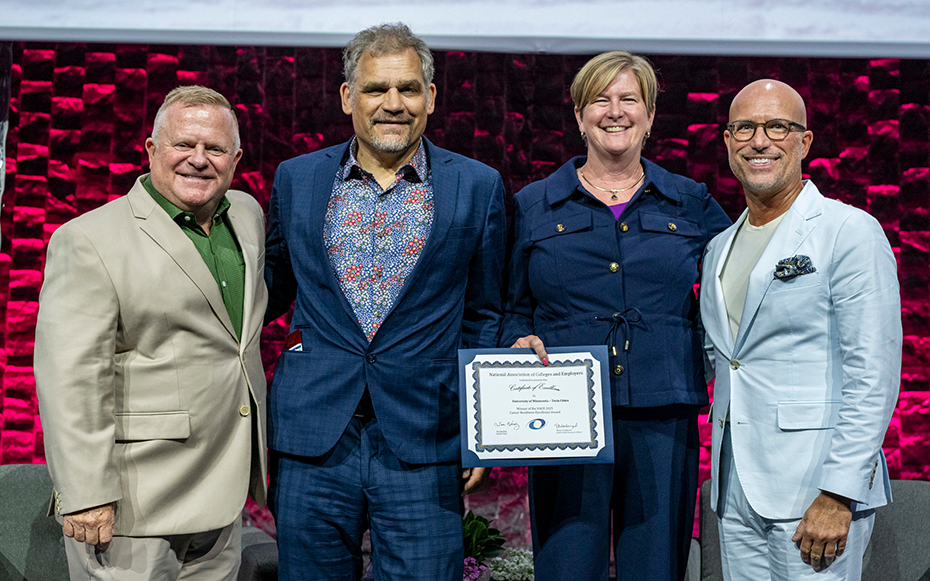
The winner of the 2025 NACE Career Readiness Excellence Award, the College of Liberal Arts at the University of Minnesota embarked on an ambitious journey in 2015 to integrate career readiness into the undergraduate experience. For more information about the NACE Awards program, see www.naceweb.org/about-us/nace-awards/.“NACE’s Career Competencies were foundational to CLA’s choice to frame its initiative through the lens of competency development. A liberal arts education provides students a diverse intellectual experience to succeed, adapt, and advance professionally and personally. However, graduates often find it challenging to recognize and articulate the applicability of their education to professional roles.”
To address this challenge, the CLA adopted a competency framework and a comprehensive readiness initiative designed to impact students from admission through graduation by helping students to:
- Accelerate competency development through experiences inside and outside the classroom;
- Navigate and plan the steps in their career development journey; and
- Articulate the “liberal arts advantage” to graduate/professional schools and employers.
CLA’s career readiness initiative is multifaceted and impacts the entirety of a student’s undergraduate experience using the career competency framework including curriculum integration, a required career management course, and ongoing conversations with students about the value of their liberal arts education.
“Integrating core career competencies into the classroom and curriculum is the hallmark feature of CLA’s approach because the classroom experience profoundly impacts student outcomes,” Anderson says.
For example, the Readiness Teaching Fellows program brings together an interdisciplinary cohort of instructors to examine pedagogy and integrate competency development into coursework. More than 70,000 students have been taught by fellows through the 2024 academic year.
CLA has institutionalized its career readiness initiative, among other actions, by:
- Developing a messaging campaign for prospective and current students focused on the “Liberal Arts Advantage;”
- Creating assessment tools;
- Approving a career course degree requirement; and
- Adding staff to support the Readiness Faculty Fellows.
CLA uses two methodologies to evaluate its career readiness initiatives’ impact on students’ competency development:
- A post-graduation survey (PGS)—In the annual PGS, graduates assess their educational experience in the CLA.
- CLA’s RATE tool—To measure student competency development and demonstrate a growth trajectory at the individual student level, CLA created 10 scales—or RATEs—to assess development. Each time a student completes a RATE, they receive an individual level score helping them understand their career competency development trajectory across the breadth of their undergraduate experience.
The PSG and RATE tool show positive results. Longitudinal data (2016-24) from the PSG show a meaningful increase in graduates attributing their education for growth across all competencies. In an AY24 survey of 1,107 students who used RATE, 77% agreed/strongly agreed that “I am prepared to explain the value of a liberal arts education,” and 72% agreed/strongly agreed that “I can easily describe the core competencies I developed.”