Join/Renew




In August 2024, the Kenyon College Career Development Office (CDO) launched its career rewards program to incentivize student use of career services in a way that makes it fun for the students and efficient for office staff.
“Our Career Rewards Program uses a business intelligence software to automatically assign points to students for using career office services,” explains Lee Schott, dean for career development.
“The program serves multiple purposes: It encourages students to use career resources thoughtfully, ensures students are well-prepared before accessing advanced opportunities, and makes career services fun. Through the gamified engagement, points incentivize participation in diverse resources, fostering holistic career preparation.”
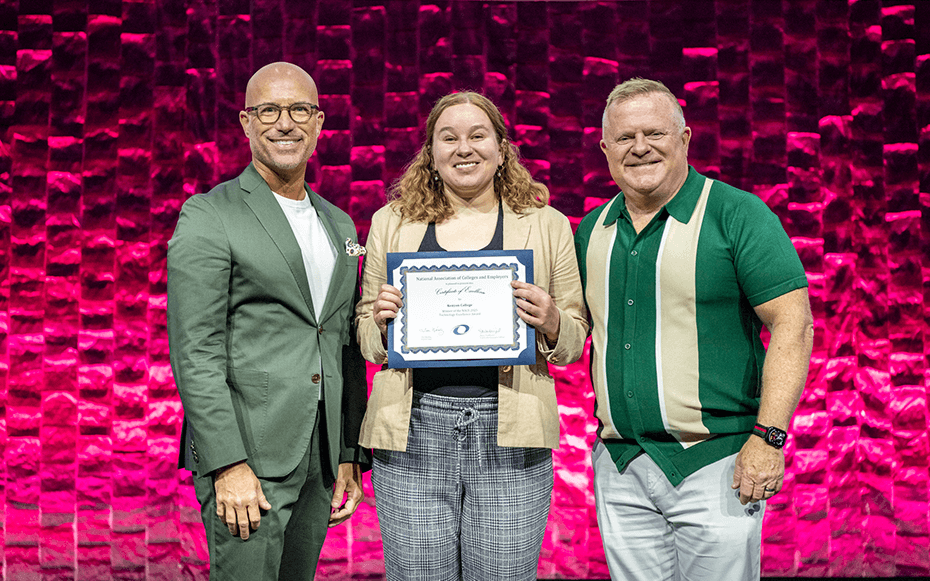
NACE AWARD WINNER
The college winner of the 2025 NACE Technology Excellence Award, the Kenyon College Career Development Office’s career rewards program incentivizes student use of career services in a way that makes it fun for the students and efficient for office staff. For more information about the NACE Awards program, see www.naceweb.org/about-us/nace-awards/.Students earn points by engaging with 26 unique services. Upon reaching certain thresholds, they unlock new, premium services such as:
- Alumni mentoring;
- Certification/exam reimbursements;
- Recruiter email contacts;
- Staff recommendations on LinkedIn; and
- Eligibility for weekly raffle prizes.
“This automated system drives students toward the most beneficial services while ensuring all students have equal access to higher-touch opportunities by rewarding higher levels of participation,” Schott notes.
“The program efficiently addresses multiple career services challenges through technology integration that requires minimal staff time to maintain—30 minutes a week—due to its automated nature.”
Schott says that Kenyon’s Career Rewards Program addresses multiple problems facing the career center. First, he says, the center often struggles to engage students across the entire portfolio of available resources.
“If they do engage, students don’t always follow a logical progression, sometimes jumping into an advanced opportunity without first understanding their interests and goals,” Schott continues.
“Additionally, alumni and employer networks require quality student interactions, making it vital to ensure participants are well-prepared before accessing these opportunities. The program addresses these issues and creates a fun catalyst that welcomes students to engage.”
It has other key features—such as a publicly available dashboard—through which students view their progress anonymously using avatars. The dashboard is designed to ensure that both study abroad students and students interested in graduate school can reach the top engagement level by using services that are available and beneficial to them.
CDO staff tracked student engagement across the 26 metrics and compared their findings to previous years. They saw a measurable increase, including:
- A 17% increase in appointments;
- Nearly double the average number of attendees at their events;
- A 6% increase in applications in Handshake, and
- A six-fold increase in the number of personality assessments completed.
These data are critical for the evolution of Kenyon’s Career Rewards Program.
“Next, we will cross-reference each engagement metric with [first-destination] outcomes for the Class of 2025 and use those correlations to iterate on the point values, incentivizing activities that have higher correlation rates with positive outcomes,” Schott says.
“We’ll also add ‘team’ functions to make career development more communal across campus. Academic departments have real-time access to aggregated engagement data for their department’s majors, as well.”