Join/Renew


Organizational Structure
-

How We Lead: Theories of Career Services Leadership
Based on interviews with two dozen career services leaders, authors Dylan Houle and Jon Schlesinger explore career services leadership theories: servant leadership, authentic leadership, and situational leadership.
-

Recommended Reading
This list, provided by Dylan Houle and Jon Schlesinger as a companion to “How We Lead: Theories of Career Services Leadership,” is based on suggestions provided by career services leaders who took part in Houle’s podcast for the books, blogs, and resources that were meaningful to them in their leadership development.
-

Employers Say Career Services Is Important to Their Recruiting Success
More than 90% of employers responding to NACE’s Recruiting Benchmarks Survey said career services is important to their success on campus. There are four overarching ways career services can contribute to that success.
-

Moving Toward a Career Ecosystem at PLNU
The expectations of career services in higher education have never been greater. Families, students, and institutional leaders are asking tough questions: What support do you offer students in finding jobs after graduation? How will a degree translate into a meaningful career? What is the return on investment for a college education? The answers to these questions are complex, but they point to a broader shift in our field that calls for systemic transformation rather than incremental improvement.
-

Managing Career Ecosystems: Thriving in Decentralized Career Centers
The “career everywhere” model can add a layer of complexity to the coordination of services, but career centers can thrive in models that are partially or fully siloed. In this article, author Chantelle Wright highlights the benefits and disadvantages of decentralized models, and provide strategies for success in career ecosystems (decentralized or not).
-

Applying NACE’s Principles for Ethical Professional Practice to AI
For those in career services and early talent recruiting who are considering using artificial intelligence (AI) in their work, the Principles for Ethical Professional Practice Committee offers an ethical framework based on NACE’s Principles.
-

Latina Senior Executives Are the Secret Superpower for Your Organization
Research findings underscore the need for organizations to invest in enhancing recruitment and retention strategies for Latinas in senior executive roles.
-

Equity, Access Keys to Forging Partnerships Across Campus for New UT Austin Career Center
The University of Texas at Austin (UT Austin) is a public Research 1 university with 52,000 students and 18 colleges and schools, including medical and law schools. Like many large universities, UT Austin has a highly distributed model of 15 career centers within schools, and each area operates independently.
-

Elevating Career Development Within Your Campus Culture
Clarion University was part of a historic integration within the Pennsylvania State System of Higher Education (PASSHE). Since 2020, Clarion, California, and Edinboro Universities of Pennsylvania have worked to plan and execute the integration of their three unique, standalone universities to one shared model. As of July 1, 2022, we became Pennsylvania Western University (PennWest).
-

The Value of Career Services
NACE’s research shows that career services has a quantifiable effect on students and their entry into the world of work. It’s hardly a new question: Over the years, many career services professionals have been asked to respond, often when budgets are tight and administrators are looking for where to make cuts, but even when that’s not the case.
-

Alignment Shift Gives LaGuardia Career Services Access to More Resources, Industry Partnerships
During the pandemic in 2020, LaGuardia Community College—a public community college that is part of the City University of New York (CUNY) system—inaugurated a new president, who is an advocate for workforce development as well as for internships. In addition, the chancellor for CUNY established career services as one of his priorities.
-

Grant From UNCF the Catalyst for Elevation of Career Services at Tougaloo
A grant from the United Negro College Fund (UNCF) helped to move career services to a position of more prominence at Tougaloo College and embed career readiness in the school’s curriculum.
-

New Division at Michigan State Adds Research Component to Career Services
Career services at Michigan State University (MSU) is a centralized/hybrid organization of offices and is well-known for its Career Services Network, which is composed of career services professionals strategically located in central and college-based offices.
-

Shift to Advancement Allows W&M Career Center to Support Students and Alumni in New Ways
William & Mary (W&M) has recently undergone a shift that has elevated career services, alumni engagement, internships, and applied learning at the highly selective, Research 2, public, residential research university.
-

Reporting Directly to President a “Best-Case Scenario” for Grinnell’s Dean of CLS
Soon after Mark Peltz was hired as the associate dean and director of career development at Grinnell College, it began a process of institutional elevation and prioritization of career services.
-

Career Centers Continue to Shift Away From Student Affairs
Over the past 10 years, there has been a clear shift away from housing the career center in student affairs.
-

Case Study: Student Activism and Employer Access
A senior university official requires the career center to bar a specific employer from on-campus recruiting events due to possible protests.
-
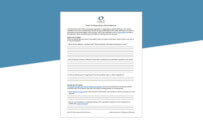
Rubric for Responding to Ethical Dilemmas
The rubric models the Principles Committee’s process in addressing requests for advisory opinions and can help career services and recruiting professionals address ethical dilemmas.
-

Principles for Ethical Professional Practice
NACE’s Principles provide everyone involved in the career development and employment process with an enduring ethical framework on which to base their operations and interactions.
-

A Faculty Guide to Ethical and Legal Standards in Student Employment
The guide provides faculty with information about the ethical and legal implications associated with referring students for internship and employment opportunities.
-

Case Study: When Faculty Refer and Rank Students for Employers
This case study by the NACE Principles for Ethical Professional Practice Committee addresses the ethical issues involved when faculty refer and rank students for employers and offers recommendations for how career center staff can resolve the issues.
-

Sample Faculty Reference Letter
Sample Faculty Reference Letter Dear [Name of Employer]: This reference letter is provided at the written request of [name of student], who has asked me to serve as a reference on [his/her] behalf. It is my understanding that [name of student] is being considered by your organization for the position of [job title].
-

Glossary of Disability-Related Terms
A NACE task force developed a glossary of terms relevant to supporting individuals with disabilities.
-

Case Study: Whose Data Is It Anyway?
A career center compiles first-destination survey data; other offices on campus want access to the raw data.
-

Fraudulent Employers: Tips for Career Centers and Students
Career centers and students must be vigilant about fraudulent employers and should identify steps to take to verify the legitimacy of an employer.
-

Advisory Opinion: Working With International Students
This advisory opinion from the NACE Principles Committee addresses concerns many career centers have in working with international students who are limited by work authorization restrictions.
-

Index: NACE Principles for Ethical Professional Practice and Ethics-Related Resources
Use the index to find case studies and advisory opinions related to specific NACE principles, and to match up NACE principles to ethics-related resources.
-
Advisory Opinion: Managing Data Security With Technology Providers
This advisory opinion, developed by the NACE Principles for Ethical Professional Practice Committee, offers guidance on working with technology service providers in managing data security.
-

The Value of Intentional Cross-Identity Mentorship: Examining the Benefits of Shared and Differing-Identity Mentors
There are benefits to engaging with a mentor with whom you do not share an identity.
-
Personal Insights From the Authors
Philip Wilkerson, III and Samara Reynolds, authors of “The Value of Intentional Cross-Identity Mentorship,” share their personal insights about mentorship.
-

Advisory Opinion: Requiring Logins, Passwords Violates NACE Principles for Ethical Professional Practice
Employers should not require a candidate’s social media account logins or passwords; it violates NACE’s ethical principles.
-

Case Study: A Question of Equitable Access to Internship/Employment Opportunities
This case study illustrates issues that career centers and employers face in providing students with equitable access to services and opportunities.
-

Case Study: When a Student Reneges on a Job Acceptance
After accepting a job offer, a female student of color learns the company has a poor reputation with women and Hispanics; she reneges on her acceptance and accepts a offer from another firm. How does the career center address the ethical issues and the employer’s concerns about the student reneging?
-

Case Study: When an Employer Rescinds a Job Offer
A student accepts a job offer and withdraws their candidacy from other companies; the employer rescinds the job offer a month before the job’s planned start date, leaving the student with no job and no on-campus access to other employers. What are the ethical issues involved? What can the career center, student, and employer do?
-

Advisory Opinion: Career Centers Should Not Select Students for Employers
In this advisory opinion, the National Association of Colleges and Employers explains that career centers should not select students for employers to interview for jobs or internships and reviews the ethical underpinnings of that opinion.
-

Case Study: Confidentiality of Student Advising/Coaching
A student’s identifiable demographics are sent via email by career center staff and shared with others outside of the university. Besides the legal implications, such a scenario has ethical implications, which are addressed by the NACE Principles for Ethical Professional Practice.
-

Advisory Opinion: Rescinded and Deferred Employment Offers
Rescinding a job offer or acceptance is unfortunate and should only happen in rare instances. This advisory from the NACE Principles Committee considers the relevant ethical issues.
-

Advisory Opinion: Supporting Appropriate Recruitment and Employment Practices: Guidelines for Career Center Staff
By supporting appropriate recruitment and employment practices, career services can play a key role in ensuring positive connections between employers and students. Career centers should develop policies that govern an employer’s access to their institution’s students for employment recruitment purposes.
-

Advisory Opinion: Setting Reasonable Deadlines for Job Offers
The timing of job offers and acceptances is market-driven. NACE encourages employers to set reasonable deadlines that work for their organizations and students.